Month: February 2014

Mexico Born Artist Becerrah Keeps Balance of Every Day Via Creative Process

Interview With Dinorah Becerrah

 About: Dinorah Becerrah is a painter focusing primarily on flowers and other natural designs. Currently, she is practicing out of Vancouver, B.C. 

dinorahbecerra

Visit Dinorah’s Youtube Channel: http://www.youtube.com/user/VivalaVidaDinorah?feature=watch

This is your third time at the event. What is it about the A.W.E that keeps you coming back?

I like to see different artists and their work. I think it is a great opportunity for artists whom may be new in the city or are exploring a new medium. I enjoy the feedback that I get from the public, and there is a very large traffic of people.


How were you influenced as an artist by your heritage or home town? 

My father writes poetry. My mother used to paint. My sister is a poet. In my home town, Mexico City, there are Frescos everywhere.

Who was your main inspiration growing up and how has it changed from then? 

It was my mentor Jorge Arturo Ojeda, a poet and writer. Therefore, I was a poet, but the need to express in the most basic form for me is painting.

Many of your paintings have floral designs. Is there a reason for your focus on flowers? 

I believe that the flower represents the essence of life: cause and effect. I associate Flowers with women and with life.

Your work also features bright and bold colours. How do you experiment with the use of colour while painting? 

There is joy in pink, strength in red and coolness in white, which are my basic colours.

How have you developed as an artist, both professionally and personally? 

I have developed by reading and listening music, attending concerts and lectures, and sharing with others. Experimenting with different mediums.


What was the last artwork that had a lasting effect on you? How so? 

Recently I made a painting called “La Coatlicue”. Coatlicue is an Aztec Goddess, the creator of the earth and Heaven. She’s the Mother of all gods.  I just love it!


How did you receive your training? 

At twelve I was introduce to paint by my sister’s friend, who was a young talented artist. By fourteen I was under the wing of my mentor.


What type of environment do you prefer to work in? 

I prefer to work in my own space. I play with the canvas and its reflection on a bunch of mirrors at different angles. Then I have light coming from different angles as well. I love to work at home alone.


Where do you get inspiration for your art? 

Every day I see beautiful things! Whether it’s in figures or words, children, animals, water, mountains… Its all over!


Have you ever gotten  “Artist’s Block” and if so, how did you deal with it? 

Yes. Changing my language and country blocks me temporarily, but i’m glad because I create even more afterwards. 


Is there a main theme or message to your art? If so, what? 

Life, women and nature: the three universal Powers.


Did you always want to be an artist? 

Yes. The creative process keeps the balance of everyday life.


Do you currently have a favourite artist or gallery? 

I love open studios, specially as it has been done in San Francisco, where several artists open their studio or home to the public. In this way, the public gets a deep sense of the art and their creator.


Describe the Vancouver art scene in three words. 

Naturally revealing scene!

Small Town Carver with Big Dreams Joins Art World Expo!

Welcome to Art World Expo Tim Motchman!

By: Alyssa Laube

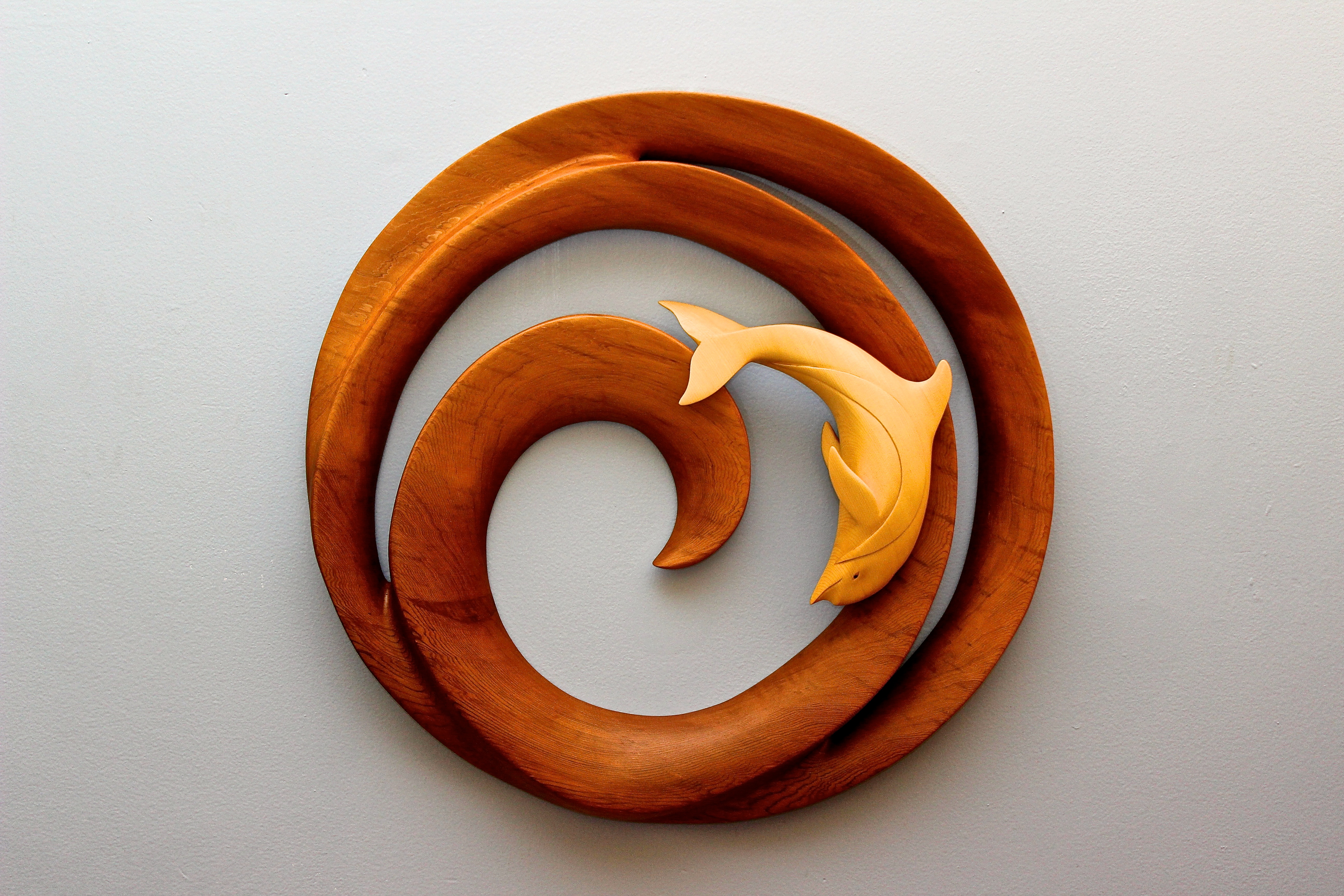
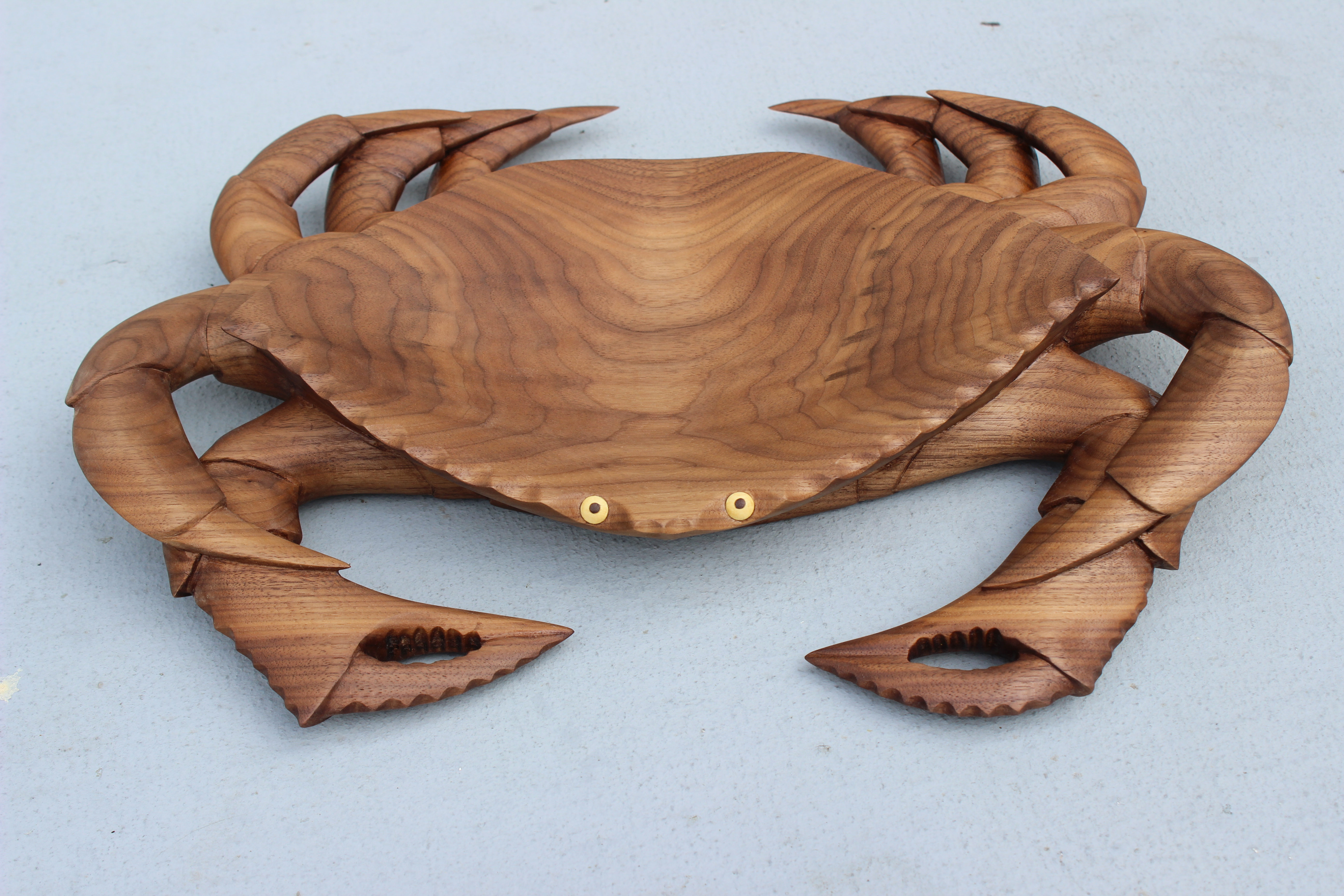
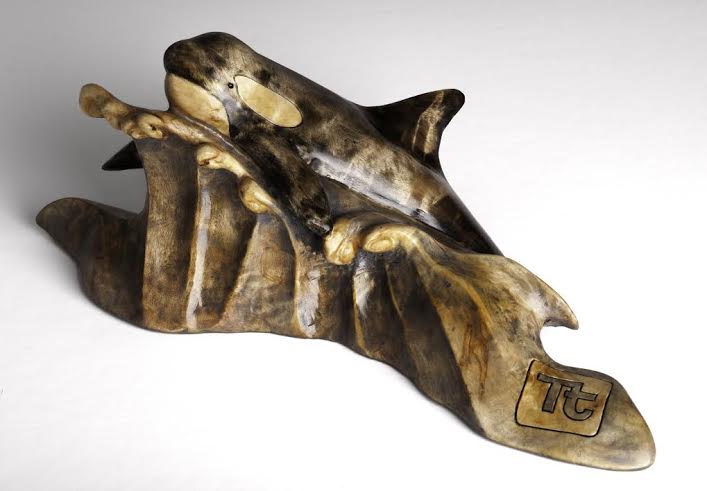
About: A self-taught woodcarver from Vancouver Island, Tim Motchman creates sculptures inspired by nature and beauty. To see some of his work, go to:

http://www.cedarvisions.com/

timmotchman1  timmotchman4 timmotchman5    timmotchman9timmotchman7

This is your first time at the Expo. What are you expecting or looking forward to?

I don’t really know what to expect. Coming from a small town on the North Island I am sure it will be quite an experience and I want to try it for that reason alone. I am expecting to meet a number of other artists, to see some beautiful works of art and to connect with people who are interested in my work.

timmotchman2

How did you get started in woodcarving?

I got started woodcarving quite by chance while cruising the coast by kayak. I was so enthralled by the beauty all around me, had lots of time on my hands and was surrounded by wood on the beach.

British Columbia is known for it’s artistic use of wood in native art. How were you influenced as an artist by B.C’s culture?

I am influenced by the creatures, life and beauty I encounter in my daily activities. Birds on the beach, whales or dolphins swimming by, loons calling, kelp flowing in the tide. The world around me is what influences me and guides my art. I am a coastal artist trying to express my love and appreciation for the world around me.

How has your heritage or family influenced you?

My British heritage as provided me with a strong work ethic and my family has always supported me. My wife Sheila has become a vital part of who I am as an artist. Her support, ideas, encouragement and guidance have made a huge difference in my work and who I am as an artist. I would not be where I am today without her.

How have you developed as an artist over time, both professionally and personally?

My growth as an artist has been one of slow, steady progress. My skills I have grown with each day at my work bench. Pieces I can create today I could not do a year ago. My ability to work with wood and tools evolves constantly. The size of the pieces I can create now has gone from a few inches in length to over 6 feet. The complexity of my work has also grown. My ability to see and understand movement and how to incorporate that movement into my carvings has also grown. I feel that my pieces are becoming more and more “alive”. With the growth of my skills as a carver I feel a real sense of completeness in myself as a person and that reflects in my growing sense of peace and contentment. For the last 13 years I have been able to work full time as a wood carver. Being able to focus on my art has really allowed my work to grow.

How did you receive your training?

I am a self taught carver, and I have trained myself slowly and at times with great difficulty. Each day is a learning day and each day I strive to create the best piece I possibly can. I have taught my eyes, hands, fingers and muscles to work together in wood to bring my carvings to life. I have worked hard to understand my medium and learnt through trial and error all the tools I need to carve the way I do. From milling logs with my chain saw mill, to working with adze, mallet, chisels, shaping tools, sandpaper and finally finishing.

What type of environment do you prefer to work in (ie: a studio, home, etc.)?

I prefer to work in my studio which is divided into three parts. (There is) an outside work area under a clear roof where I do the chainsaw work, grinding, power sanding, planning etc. The real dusty work is done there. The bulk of my carving is done by hand in my inside shop which has a large work bench under a large window. I work standing up and enjoy the view of the ocean, the warmth, music and my large range of tools. I have finishing room where I finish my pieces away from any dust. It is here that also do my drawing and packaging to ready pieces for shipping.

What was the first piece of art you sold?

The first piece of art I sold was to Dr. Paul Sponge and Helena Symonds of Orca Lab on Hanson Island. It was an owl to go above their front door to bring good luck to their home. It is still there after 28 years.

How do you challenge yourself in order to improve or develop new ideas?

Each day I strive to make the best possible carving that I am capable of. I keep in mind that some one is going to have the this carving for years and it needs to be the very best I can do.

Did you always want to be in woodcarving? If not, what did you want to be and when/why did you change your mind?

I had no idea of being a woodcarver growing up nor as a young adult. Woodcarving came to me from my desire to live a simple life on the coast. Before becoming a woodcarver, which is a constant process, I was in the navy, worked with handicapped adults, tree planted and drove boats.

Do you currently have a favorite artist?

I have a number of favorite artists which are in no particular order: Charles Edenshaw, Bill Reid, E.J. Hughes, Robert Davidson, The Group of Seven, Robert Field, “Kayak” Bill Davidson, Emily Carr.

timmotchman3 timmotchman8

What can’t she do? Meet International Artist and Super-Woman Marie-Anne Vorlet!

Marie-Anne Vorlet was born in the French part of Switzerland and raised as well as schooled in the German part of same country. After high school, no longer able to numb the urge to travel and experience the world, she looked for ‘portable’ work. She spent her first years as a working girl as a nanny in England, Cameroon (West Africa) as well as in Switzerland. During those much enjoyed years she developed a yearning for more knowledge which surprised her as she remembered school as a place of boredom. After earning the ‘Matura’, the Swiss school diploma required to enter any of the countries universities, a short detour to medical school helped Vorlet figure out what she did not want in life. It also allowed her to finance her years studying math, physics and astronomy. Working night shifts at the major teaching hospital in Zurich, teaching math as well as Tao Yoga on the side made ends meet. After these quite long years the travel bug hit again. Lucky enough to find a very flexible employer in one of the two big Swiss banks as well as work as a freelance translator, Vorlet explored parts of Europe, America, Nepal, Hawaii and South Africa. Crafting, especially sewing and knitting has been a hobby since age five, a year working in the shop of a avant-garde dress-maker in the late eighties, gave her the possibility to have a close look behind the scene. Statement: “No matter what I am doing, I am at my very best when dealing with a situation that is completely new to me. And I do love to create some

marie

Interview With Marie-Anne Vorlet

by Alyssa Laube  

About: Marie-Anne Vorlet, born and raised in Switzerland, is a woman of many titles – from world traveler and volunteer to artist and entrepeneur! For more information on Marie, visit:

http://www.thetinybigbag.net/MAVBio.htm

 Having grown up in the beautiful country of Switzerland, were you influenced by your roots? How so? 

Yes. I think my roots have indeed influenced me, especially the French Suisse part of them, as well as our beautiful landscapes. The Swiss “Frenchies” take life easier and appreciate beauty and the arts a lot!

You’ve spent a lot of time travelling in your life. How did this change you, both as a person and an artist?

Travelling is definitely my bliss in life. I love to see new landscapes and colors, taste new foods, and meet people with different ideas. Travelling and volunteering in Africa made me appreciate the many possibilities we have and tend to take for granted in the rich countries!

How does Vancouver compare to other cities that you have lived in?

I love and appreciate the proximity of big city-life and nature that Vancouver offers. It makes it a part of my “all-time favorite cities” list, which includes Zurich and Cape Town for the same reasons.

Have you always had an adoration for new experiences? 

Yes – I actually had a longing for the “new and exotic” since Primary School, which, as a child, made me devour books with a passion.

As a person who has tried many different occupations, do you feel that they were necessary in order to find your true passion?

Definitely! Nothing compares to personal experience.

What do you consider to be that passion?

Art, making new ideas work, i.e. creating my own NGO: www.educationwithouborders.ch, which was inspired by my Canadian friends. After volunteering regularly at and supporting my friend Heather Reynold’s orphanage, ‘God’s Golden Acre’ in KwaZulu-Natal, South Africa, for years, I strongly believe that education is a door opener!

How many languages do you speak?

Four: Swiss German, German, French and English – I have plans for learning Zulu as soon as I have more free time.

How was it beneficial to be multilingual, professionally? 

It has been very beneficial, especially in Zurich because this city is quite international in its focus.

What is your favorite place that you have been to or lived in?

Namibia – the desert colors are just divine! Paris: fashion, art, food – need I say more?

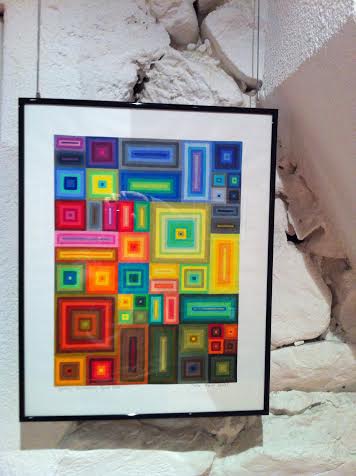
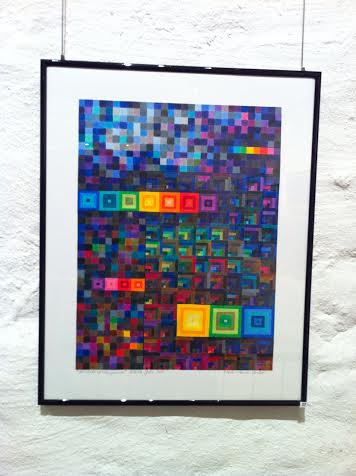
Many of your paintings focus largely on shape and color. Where did this fascination come from? 

It still surprises me how a different color can “change” a shape, it just never gets boring.

You have quite the variety of hobbies! Which ones do you still practice today?

Traveling and spending as much time outdoors, preferably in nature that has not been altered by humans.

Are there any that you would like to explore?

Yes, learning to fly!

A recent project of yours is The Tiny Big Bag, described as “The ultimate fashionable tote handbag (which) folds into handkerchief size.” Where did you get the inspiration for this idea? 

Moving to Vancouver many years ago (in 2000) from a country with very strict laws concerning the environment I was shocked to see that plastic bags were still free and used in enormous numbers in Canada. My cultural-shock-question was: “Would you like this double bagged?”


For original ideas such as The Tiny Big Bag, do you prefer to manage them individually or cooperatively with others? 

I would love to take a highly motivated partner on board – someone who has strengths I do not have myself!

Looking back on your journey, do you have any favorite/least favorite memories?

My favorite memories include the first time I saw the ocean (all the space!) after so many mountains at home. And, of course, the first trip I took out of Europe at the age of 17, which led me to Cameroon. Since then I am hooked! Africa is still my favorite continent!

Is there any point in your development as an artist that you regret or cherish most? 

I have few regrets in life! I cherish the fact that I am mostly self-taught in regards to my artwork. Curiosity is what keeps me going in life.

What are you looking forward to the most at this year’s Art Expo? 

The chance to meet people, see a lot of other peoples artwork and the possibility to show my work in a great location at Science World!

marie2

Annual Body Painting Competition is a Hit-16,000 and counting!

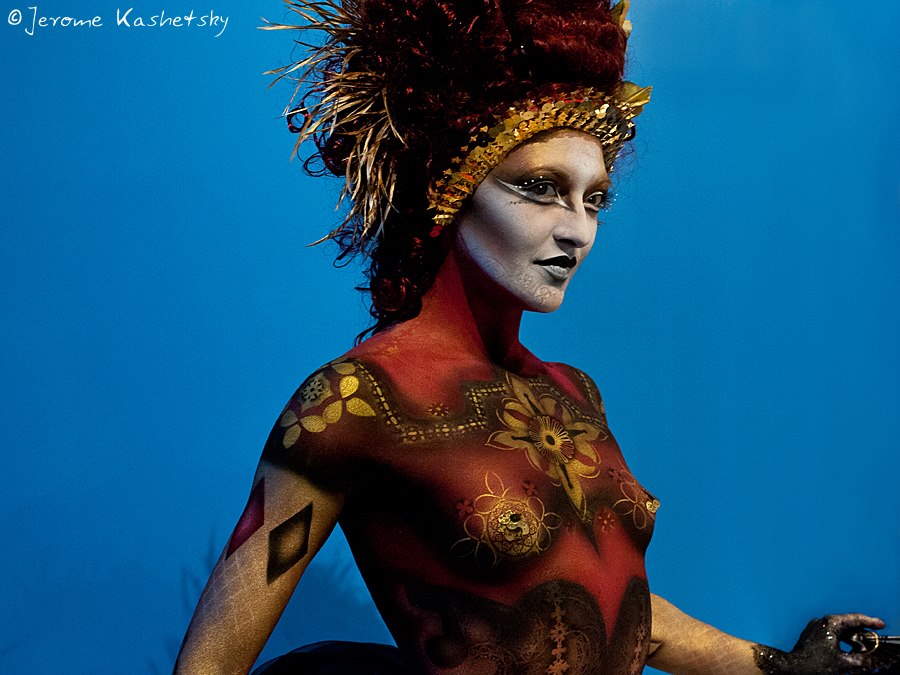
Whether you are a fan of special effects make up or live performances, our annual Art World Expo TM Body Painting Competition is a fantastic hit every year! Last year’s competition has hit over 16,000 hits on Youtube and counting!

Check out these fantastic body painters from Art World Expo 2013! A big thank you to Reiko Mackenzie from the Real Housewives of Vancouver for hosting the competition! Congratulations to Natacha Trottier for her title as the AWE Body Painting Winner 2013.

natacha_bp_2013

See you this year for another fantastic show!

Get your tickets:

https://www.eventbrite.com/e/art-world-expo-tm-tickets-10141123373

Carve or Starve!-An Interview with Jesse Toso

About: Jesse Toso, born and raised here in British Columbia, is a talented woodcarver whose tool of choice is equally impressive: a chainsaw! To see some of Jesse’s extraordinary work, go to: 

http://www.stumpartist.com

Image

Image


The first time you carved was at a competition in 2005, at which you took first prize in the Amateur category! What motivated you to take part in the competition, and did you have a feeling that you would be a natural?

I grew up in Campbell River where the Transformations on the Shore Chainsaw Carving Competition has been taking place since 1997 and I remember looking at the amazing carvings produced at the event each year and I thought to myself: “I could do that”.  So,  I borrowed a chainsaw and hacked away at this giant piece of Douglas fir and by the end of the week, I had shaped out a Phoenix. After taking home the $1000 prize, I decided to do it every year after. This year will be my tenth!


Why do you prefer to work with a chainsaw, rather than other tools? 

Chainsaws are fast.  

In your opinion, how does the type of wood influence the final carving? 

The type of wood I use influences the final carving immensely.  The colour, the size/shape, the grain are all contributing factors.  Sometimes I look at a piece of wood and determine what to carve based on it’s shape and type, and other times I will want to carve something and look for a piece of wood that will work, but ultimately it is the wood’s inherent qualities and characteristics which influences the final carving.

What did you do for a living before wood carving entered your life? Do you think you will continue to wood carve for the rest of your career? 

I am a carpenter by trade as is my dad so working with wood comes to me naturally.  I will continue to keep carving wood, but I am also interested in exploring the artistic relationship(s) between other building materials, namely: glass, metal and concrete.  And I’ve always wanted to try carving ice.

What is the best part of working in wood carving?

Wood is a beautiful, natural, and quite versatile.  And it’s sustainable.

How have you improved over the years? 

I improve every time I carve. Going to annual carving events such as the competition in Campbell River and Carva-Palooza (an annual chainsaw carver’s convention in Ontario) has also been a huge boost.  I hope to continue improving with every carve.

What do you consider your most difficult piece? How about your favorite one? 

I would say the 16-foot spider hanging on the side of a building in downtown Campbell River was my most challenging and my favourite, too.  It involved creative engineering, 3D visualization, chainsaw joinery, and it was done in five days (as a part of the carving competition).  Also, it caused a bit of controversy.  People wrote into the local newspaper asking it be taken down as they have arachnophobia and could no longer go to the theatre because of the giant wood spider overhead!  Other people then responded in defence of the spider, and it so had people talking in Campbell River.  Which is what art should do, right? I have since carved several spiders and I will be bringing a “smaller” 8-foot version to Art World Expo.

You’ve worked on a variety of different sculptures, mainly focusing on animals. Do you prefer to use nature for your inspiration and how come? 

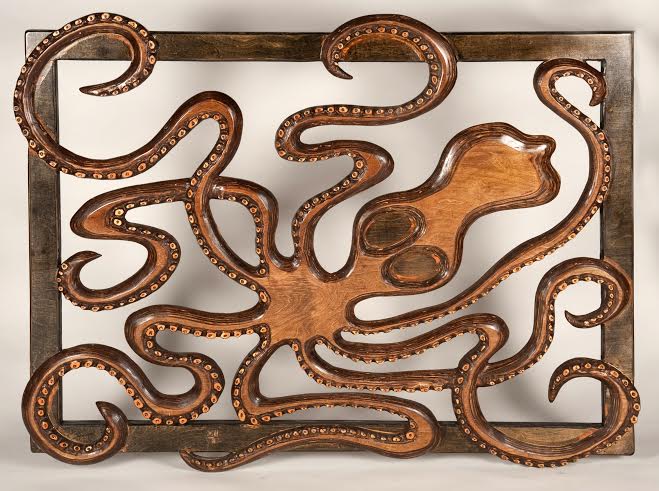
I am drawn to curvy, smooth, rounded, flowing shapes such as octopus legs, dragons, or the neck of a heron, and so find myself carving such shapes.  It happens that most things with these characteristics are from nature.

How has working first-hand with nature changed your relationship with it? 

Trees are precious. I am honored and humbled when I carve into wood that had once been a tree that had been standing for hundreds of years. I feel I need to use every bit of the wood I am carving.  Many of my carvings are from off-cuts from other carvings. 

Do you think that wood carving differs from other forms of art? How so? 

All art is expression. Carving wood with chainsaws is just another way for me to say: “Look what I can do!”

Do you have any advice for beginners in the field? 

Carve or starve! 

 Image

Have you ever done a collaborative piece? If not, would you like to? 

I have done several collaborative pieces.  As a part of Carva-Palooza, one of the several carvings we do is made with a partner. Actually, this year I will be leading a group project (at Carva-Palooza) where eight of us will carve a complete chess set out of logs. I am really excited to see how this turns out.