mabventuresinc

ART WORLD EXPO 2015 REGISTRATION IS NOW OPEN!

Can you believe that our 5th anniversary is coming up in just 10 short months?

natachawinner2

We are so excited about the event and we cannot wait until our special edition event on May 1, 2015!

As always, we are looking for amazing artist exhibitors, body painting competitors, fashion designers, and entertainers to join our event! Applications for artists, body painters, and arts related business exhibitors are ready and can be downloaded at the application on our site: Exhibitor Information

New Image College of Fine Arts Sponsors Art World Expo!


A visit to New Image College of Fine Arts discussing the upcoming installment of Art World Expo at Telus World of Science! New Image College has been instrumental to the success of our fourth exhibit and we are pleased to  be working with such an amazing school based in downtown Vancouver.
Art World Expo support local artists and strive to give them the best opportunities to show and sell their work. We also love to engage the general public with opportunities to interact with artists of all sorts at this one of a kind event and annual showcase.
All proceeds from this event support Make and Break Arts Foundation.

Artist Vicki Rae at Art World Expo 2014

Accomplished artist Vicki Rae joins Monika Blichar in studio for a candid interview about her craft.

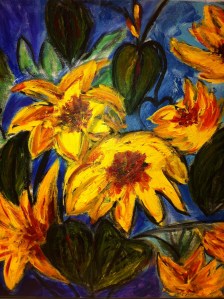
ART WORLD EXPO TM Proudly Presents: Artist Vicki Rae

Vicki currently lives and works in New Westminster, BC. She received formal training at the Lorenzo di Medici Art Institute in Florence, Italy and is otherwise ‘self taught’.

A Vancouverite with Native Canadian and South African roots Vicki has explored various themes such as SAFARI and other wildlife subjects, dance and human experience, spirituality and psychology.

Using a striking, vivid pallet, expressionism and the full spectrum of human emotion Vicki’s body of work honours and embraces the light and the shadow, and en masse, is a captivating visual journal of her life and experiences.

“Employing intuition as a guide and raw emotion as fuel, I give all of myself to my Art. I engage with each piece, as if in a dance, and allowing the painting to lead me I aim to reveal it’s unique energy, it’s voice and the story it has to tell.”

For more information about Vicki, please visit:
https:/www.vickirae.com

Art World Expo TM tickets are available online:
http://artworldexpo.eventbrite.com/

By Phone: 1 604 999 6177

Email: artworldexpo@gmail.com

Event Information, Applications and Artist Interviews:
https://artworldexpo.wordpress.com/

Connect on Social Media:
https://www.facebook.com/ArtWorldExpo
https://twitter.com/ArtWorldExpo

2014 Theme: CIRCUS!
“Life’s A Circus, Enjoy the Show!”
Don’t forget your Top Hats and Clown Costumes!

Art World Expo is an annual fine art show and sale representing local and international artists of all mediums. The event was founded by Monika Blichar in Vancouver, BC in 2010 and is held at Telus World of Science the first Friday of May each year. For more information about Monika Blichar for MAB Ventures Inc. including information about MAB Art Studio & Boutique Gallery, please visit: https://www.monikablichar.com 

An Interview with Diva’s Niche Designer Rebecca Fisher

Interview With . . . Rebecca Fisher

by Alyssa Laube 


A Quick Autobiography

Throughout my life I have been many things – a daughter, wife, mother, llama farmer, business owner, teacher and now student. And now, as a recent breast cancer survivor, I find the experience of mastectomy, chemo and radiation to be a catalyst to many life changes. Now I am enjoying, with renewed excitement and appreciation, the preciousness of life. Divorced and with a decidedly different external landscape, I find myself drawing on my creative side with much more intensity, truly believing in the power of healing through art. I am recent graduate Capilano University Textile Arts Program where I spent two blissful intense years honing the skills I have garnered over a lifetime. My current work involves explorations in millinery and accessories finding these small canvasses the perfect venue for my creative energies.”

Image


When and how did you first get started in textiles? 

I remember using my mother’s sewing machine when I was 5.  I also remember taking my sister’s clothes and cutting them up to sew into Barbie clothes. I’ve been doing it since then.


Did you know you would want to do it as a profession?

My grandma came to Vancouver from London, England in 1905. She supported her family by sewing and selling smocked dresses out of her children’s clothing store on Robson. When I was 9, she taught me to smock. It was a very serious endeavor for her and she made me swear on a bible never to tell anyone how to do it ,as one day I would make my living smocking. When I had completed a baby dress, I went back to see her and she went over every stitch, folded the dress in her lap, and said, “It is saleable.” That was the hardest jury I have ever passed! I knew at that point that I had an aptitude for textiles and it was a natural progression.


What about working in the field do you like/dislike?

I love the alchemy of marking and colouring cloth – of taking something plain and giving it life. It’s a celebration of colour. I create these textiles with the intention that they will be worn and lived in. The only thing I really dislike is that there aren’t more hours in a day!


You use both natural and unnatural dyes. What is the reason for this, and how are they different?

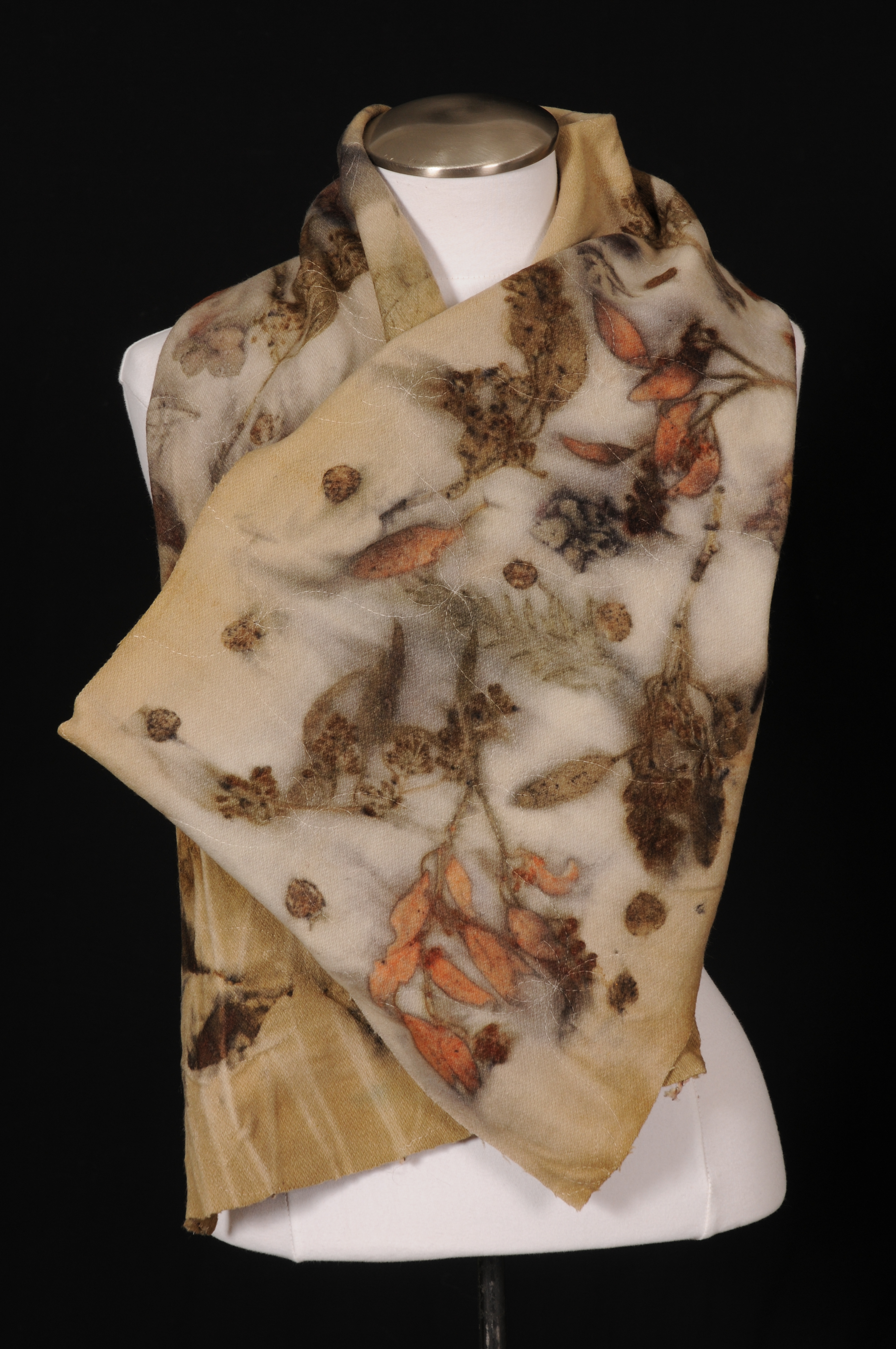
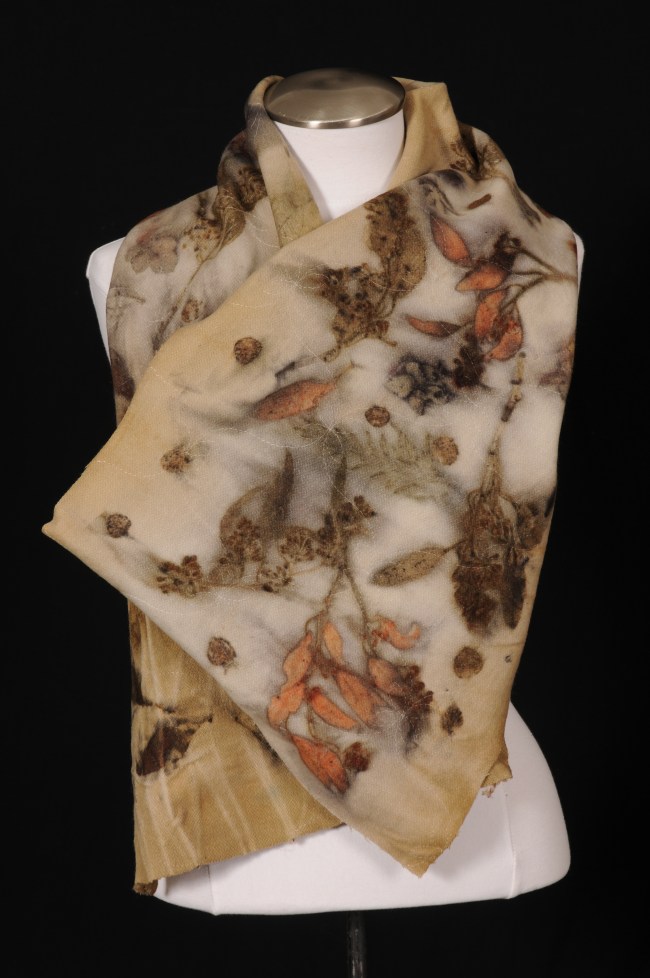
I am by no means a purist as far as attachment to a specific technique goes. Having said that, I love each for their own unique vocabulary. The natural dyes only work on natural fibres and that brings a richness that is unrivalled by anything manmade. I love the smell of the silk and wool in a dye pot of onion skin tied with rose leaves and eucalyptus. The colour palette is soft and deep and reminiscent of an old secret garden hidden away for centuries. I also feel an attachment to the many generations of natural dyers and artists before me when I work in this medium, as if my hands are not the only ones placing and wrapping leaves and flowers against cloth. It’s like a collaboration with the earth and my ancestors.

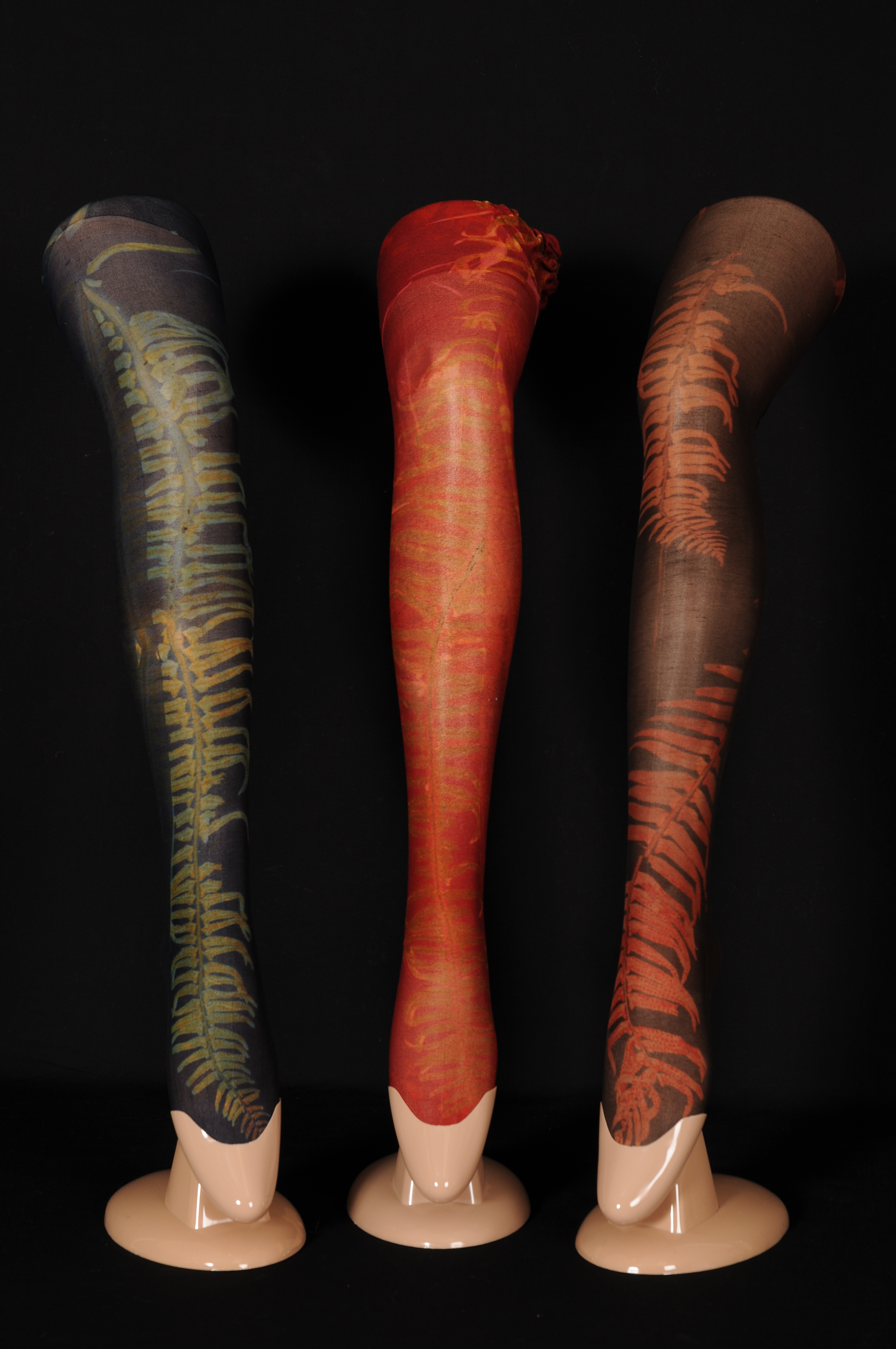
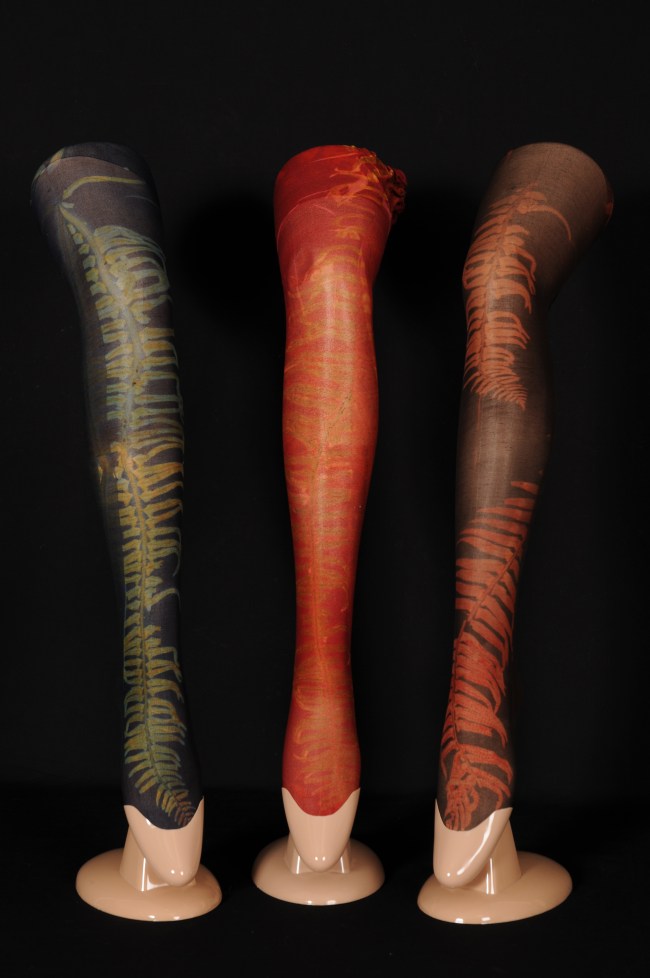
The manmade dyes have a vibrancy and colourfastness not achievable with natural dyes. There is an immediacy in their usage that appeals to my magpie-like attention span. There is also an element of repeatability and reliability that is missing in natural dyes. The dyes that I use on the printed hosiery are polyester-specific and can only be used on manmade fibres. They are particularly successful on hosiery and poly satins, hence the development of the line of printed panty hose and scarves. 
Image

How did your family influence you as an artist?

As a child, I spent a great deal of time with my grandfather. He taught me about the colour wheel using tempura paints mixed by my mother on a wooden easel built by my father. I guess you could say that my artistic side was recognized and supported. I also spent a great deal of time in my grandparent’s antique store which may account for my obsession with textiles. I remember the thick velvets and laces and today, lace images still find their way into my work. My father was an amazing gardener and I think that influenced my colour sense as well as a love for the intricacies of different leaves and flowers. My great grandmother and great aunt lived on Lasquiti Island for many years and collected many books full of pressed flowers which were put into pictures and cards. I was always mesmerized by the delicate petals pressed flat – like I was looking into the secret domain of fairies – or something equally romantic. I still have a picture over my bed made by my great grandmother with pressed ferns and flowers. The aesthetic is quite similar to the imagery on my fern imprinted hose.


Do you have any training or are you self-taught?

I have spent a lifetime exploring textile arts and am a recent graduate of the Caplilano University Textile Arts Program – a wonderful program that was my gift to myself for surviving chemo therapy after breast cancer 5 years ago. This is currently the final term that this 40 year old program will be running – one of the many Arts cuts at Capilano University. It’s such a shame. This program offers students a skill base not found anywhere else.

I was born in Vancouver and have always lived in this area. the West coast imagery is part of my soul. There is never any shortage of inspiration. It can be found on short walk down the road to the river or just out in the backyard. The little fellow that was the model for my raccoon hat was a constant visitor last year. Always by himself, he would come in the evening and hang around in the backyard, watching us with great curiosity. The skunk hat also had a live model although not so cute. He sprayed the dog 4 times last year!


Considering the exaggeration of natural elements in your work, how does living in B.C. affect you? 

Nature has both a fragility and a great strength. It has beauty that is constant and changing. I am always collecting rocks and twigs and leaves whose designs speak to me. My china cabinet is full of skulls collected from under a bald eagles nest. They sit perched on my grandmothers china. Both aesthetics equally precious to me.


Why do you feel drawn to nature?

I don’t know that it was ever a conscious idea or decision. You doodle and draw and paint and slop dye around – Some things appeal and some don’t. I very rarely have something turn out the same as the idea had when I began. Designs morph as you go. I have a very free-flow style of working that follows through the rest of my life as well. Sometimes I think it would be easier to approach things in an organized and structured fashion, but I have come to realize that you can’t fight your brain.


How do you like to use color in your clothing? 

I love colour. It’s all about mood. Sometimes it’s playful with bright colours and other times more subdued and calming. Each day is a new day.


You make both accessories and garments. Which do you prefer, and how are they different?

I probably make more accessories than garments. They are a smaller canvas and I can experiment and work out different ideas. If that experimentation is successful, then it often progresses to a garment.


How long does it take you to complete one piece, usually?

I don’t really work with things one at a time, so it’s hard to say. If I am doing hats, I’m washing fleece and as it dries I am carding other fleece and felting blanks. While they are drying on hat blocks I am needle-felting the features on other ones. It’s like an assembly line – a skill I developed through years of hairdressing. The panty hose are the same kind of thing. I am painting the designs on paper, while its drying I am collecting and preparing the ferns and leaves, then laying them out in stacks and heat setting them. I do tend to do things in runs. If I am making scarves then its a scarf day or a felting day or a flower day, mostly because each thing requires a different set of equipment and I have a small space to work in.


When you are picking which objects to incorporate into the cloths, what do you look for? 

Sometimes on a walk I will discover plants with interesting shapes or in the thrift store i’ll come across some really tacky doily with a lot of texture that is perfect. I feel like mostly, the things find me. Like the other day, I took the dog to the off-leash dog park and he shot off after a duck with me chasing after him. During that little adventure, I discovered the ferns that were growing from the trees – slightly softer and smaller than the ones I had been using. I was curious to see if they would work and how they would translate on to cloth. I loved them so I plan to go back later this week and pick some more.I am always careful to pick gently and not take too much, especially with things like lichens.
Image

Explain the process of making those objects a part of the fabric. Is it difficult?

Sometimes I will paint the actual leaves, others I will make silk screens of the leaf images and screen the dye on. Sometimes I draw the images by hand, or a combination of all 3. It’s not any more difficult than another technique but it does require a fairly in-depth understanding of how the dye works and some specialized equipment.


How did you learn to do it?

I learned my basic skills at the Textile Arts Program at Cap U and have actually just completed a directed study to develop this technique. I wanted to take advantage of the last term the program is running to further my experimentation.


Where do you find your materials?

With the leaf imprinting, any time I leave the house I usually find something. My pockets are always full of leaves and twigs and seeds. The hats I buy use local specialty fleeces and  I process them myself. The fabrics are often rescued or vintage.


Do you ever work with others professionally, or do you prefer to work alone? 

I love collaborations and I love creating in solitude. Sometimes it’s nice to have someone of a similar mindset around to assure you that you are not crazy and to bounce ideas off of.


What is your favorite piece to make?

Every piece I make is my favourite piece in that moment. Although I have to say I am really enjoying the panty hose currently.


Which fabrics do you use for each garment? How do you treat each one differently?

Each fibre and fabric type – wool, cellulose, and polyesters – all require different dyes and treatments. I use wools for hats, scarves and shawls which may also incorporate pieces of silks or polyester.


How do you experiment?

Everything I make is an experiment. I am a messy artist, not by intention. It’s just that when I am working, I am oblivious to the rest of the universe. 


How do you get such original ideas? Do you have any ways to encourage yourself creatively?

I think it is important to spend time with other creative types to keep the energy up. It’s also important to give myself time to create; turning off the phone and working undisturbed even if its just to mix dyes and sweep the floor or unroll fabric. I try to do my initial experiments without attachment to the outcome. I fine tune an idea before committing it to a 500 dollar piece of cloth. Sometimes doing something in a completely foreign medium is a great creative boost.


Do you have any other jobs or hobbies?

I foster high risk youth in the other part of my life. I like to garden and I like to cook.


How does your personal life affect your professional life?

I think the high stress level from my job fuels the need for creative expression. They kind of feed off of each other. Over the last 2 decades I have managed to keep a fairly symbiotic relationship between the 2 sides of my life.


What are you hoping for at this year’s Art World Expo?

I am really looking forward to this expo and am excited to be involved in such a creative venture. I am hoping that my textiles will be well received and I look forward to making many creative contacts. Did I mention that I was excited?


Waffle Gone Wild at Art World Expo!

We are very excited to have our first ever Food Lounge at Art World Expo this year! Debuting as our first restaurant partner, we welcome Waffle Gone Wild to our show!

Little Monsters at Art World Expo!

Interview with…

Little Monsters Studio 

by Monika Blichar 


Meet Artist Kathleen Erickson from Little Monsters Studio! 

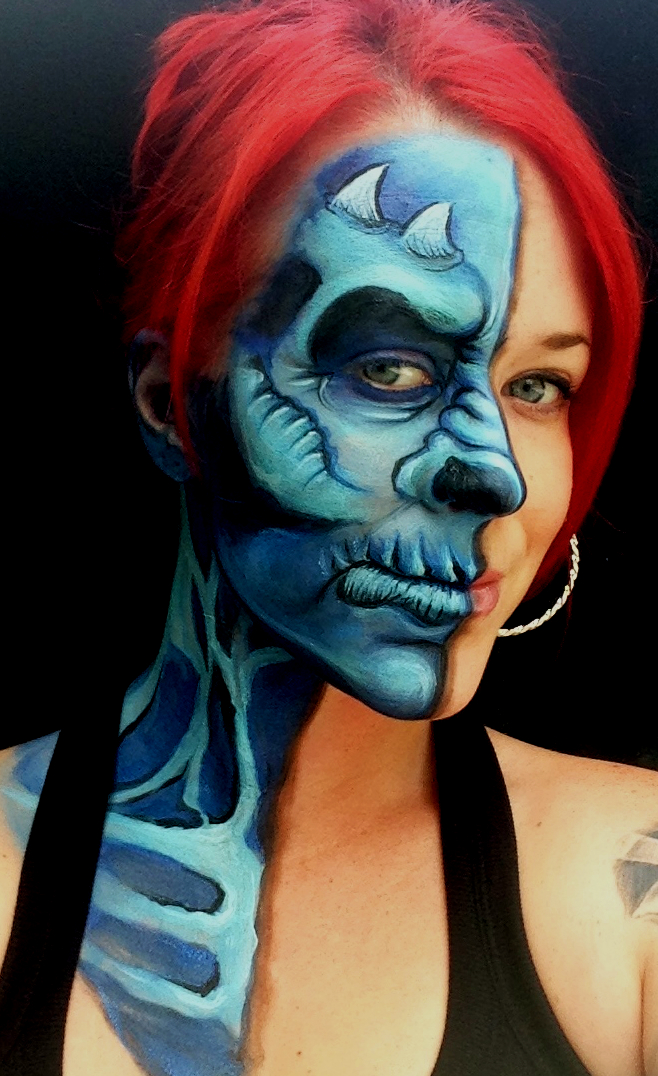
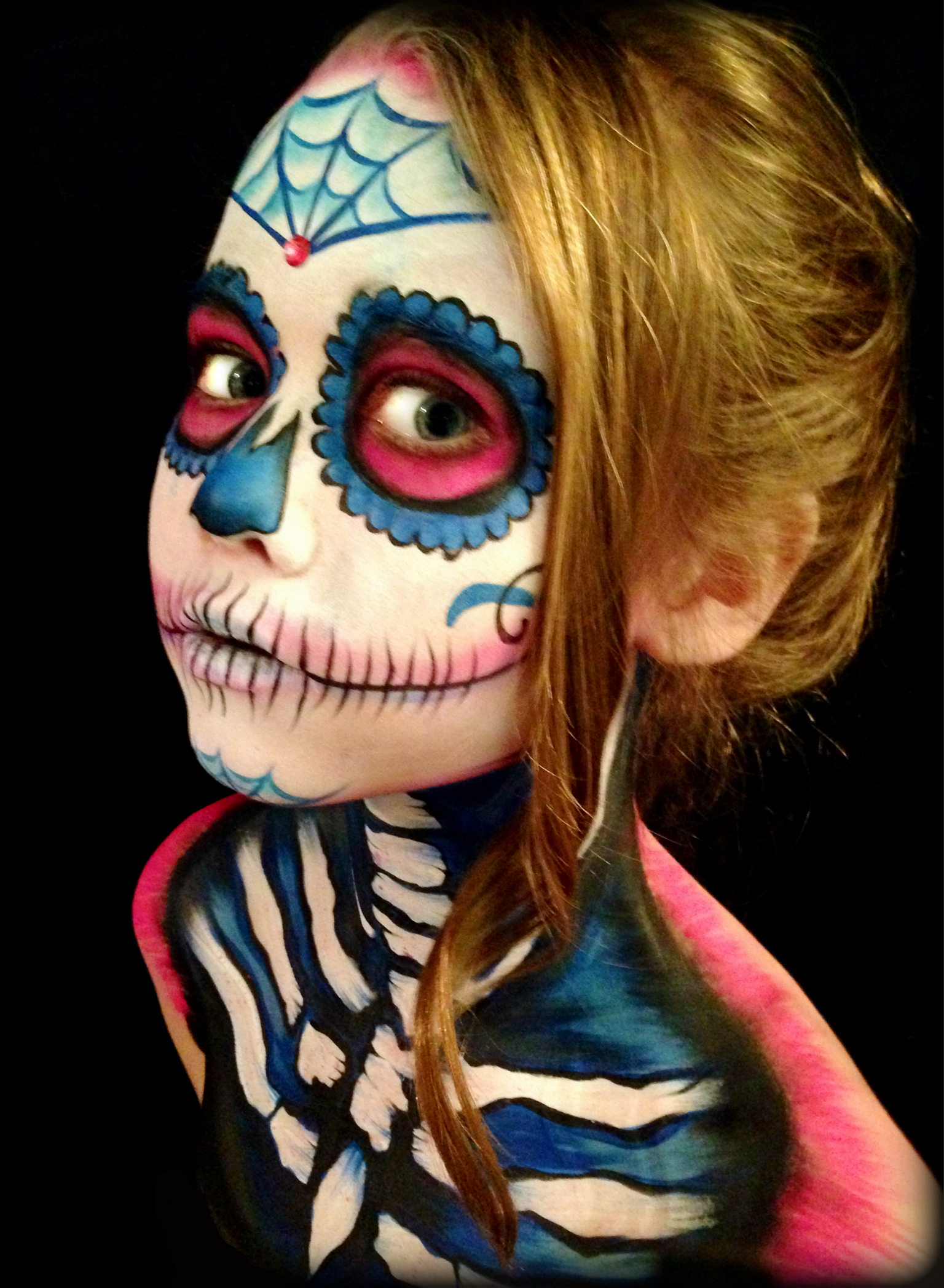
A first time competitor, we are very excited to see what this Monster can do! Apart from having amazingly talented creative skills in face and body painting, Kat is also an accomplished visual artist creating unique pieces like custom paintings and growth charts for kids. We caught up with Kat and asked her a few questions about her experience as an artist in B.C. Here is what she had to say! 


Image

When did you start doing face/body painting?

I took a more serious approach to my painting when I turned 15 and being an artist; I was always experimenting creatively with my children and painting their faces. This helped me transition into starting Little Monsters Studio three years ago.

 Image

Your family and work seem to blend together. How have your kids helped you with your inspiration for your business?

I find with maturity, I sometimes start to take a more scientific approach to my art. So having children helps to keep my art especially my body art & face painting fresh & unconventional.

My children & their friends always want their faces painted and it makes for great family outings like going to the Vancouver Zombie Walk or getting painted for a Seahawks game with my husband.


This is the first time you are competing in Art World Expo body painting competition. What are you looking forward to the most as a first time competitor?

The competitive nature of any competition will only help me to improve in my craft and with my confidence. But what I’m really looking forward to is being surrounded by so many exceptional artists and talented people.  Just being part of this contagious atmosphere and networking with my peers, will be stimulating enough. Then there’s all the great art.


What kinds of services and merchandise do you offer the public?

Face painting & body art are my primary sources of income, but I also sell my paintings and growth charts. During the month of October, I open up my studio to work on big Halloween projects for costume competitions and parties.


What is your biggest dream regarding your art and business?

My goal is to be able to support my self enough, so I am able to continue to focus on projects that I love. I adore body art and especially the Halloween spirit and just being able to continue to grow in this realm would be ideal.


Image

Welcome to the show Kat! Wishing you good luck! 


For more information about Little Monsters Studio, please visit Kat and her troop on her Facebook site: https://www.facebook.com/littlemonstersstudio?ref=br_tf


Art World Expo & 360 Replays

ART WORLD EXPO TM is pleased to present this amazing video of a one of a kind body art installation featuring the creative process in a unique way captured by 360 Replays.

360 Replays develops interactive technology for Internet TV. Their mission is to make interactive TV the regular TV on the planet. In addition, 360 produces camera systems that can be used to capture interactive content delivered over Internet television.

For more information about 360, visit:
https://www.360replays.com
https://www.facebook.com/360Replays

Art World Expo is an annual large scale art show and fundraiser featuring over 100 artist exhibitors, fashion shows, a body painting competition and live demonstrations. The fourth annual event will take place on May 2, 2014. The event is produced by MAB Ventures Inc., An Arts & Entertainment Agency with proceeds benefiting Make and Break Arts Foundation. The event takes place at Telus World of Science in Vancouver,BC, Canada and features artists from around the world.

For more information about the event or to purchase tickets, please visit:
https://artworldexpo.wordpress.com/

https://www.facebook.com/ArtWorldExpo?ref=br_tf

Order tickets by phone 604 999 6177

Body Painting Artist: Cory Keys

Hair & Face Make Up: Monika Blichar
http://www.monikablichar.com

Model: Emily Blackwell, Red Goddess Talent
http://www.redgoddesstalent.com/
https://www.facebook.com/pages/Emily-Blackwells-Fan-Page/187599184648341

Thank you to the Art World Expo TM 2014 Platinum Sponsors:

Twin Peaks Construction
http://www.twinpeaksconstruction.com

Fresh Vancouver Magazine
http://www.freshvancouver.com

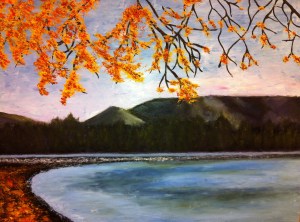
Emerging Painter Margaret Kitchen Joins The Show!

IMG_0509IMG_1249

About: Margaret Kitchen, new to Vancouver and the art scene, creates beautiful paintings of landscapes and other scenes. She works in a school teaching special needs children, and practices as an artist in her spare time.

 IMG_2067

This is your first time at the Art World Expo. Is there anything particular you’re looking forward to?

I’m very nervous and excited just to experience it and be there to see other artists.

How were you introduced to art?

Growing up, my Mom was always creative. Not in painting, but in things like beautiful knitting and needlepoint. We would come home from dances and she would have entire outfits she’d made ready for us! Also, about 5 years ago I was looking at paintings a lot and thinking, “I want to do that.” I wanted to explore something different. Reading Drawing from the Right Side of Your Brain explained that everybody can draw and not to be afraid to make mistakes and to fail. It just sort of said, “Where are the rules? Anyone can do it.” Art is an outlet. It doesn’t have to be perfect.

How were you influenced as an artist by your heritage or home town?

Okanagan landscape is so inspiring. You go hiking or to lakes and just think, “I wish I could paint this.” It’s just so beautiful. There were great local artists and galleries, so it was really just a part of the community.

Who was your main inspiration growing up and how has it changed from then?

My Mother, because it was always important for her to be creative with her hands and to completely immerse herself.

How would you describe your style?

I love using oil paint. I love art to look like art. I really like artists like Robert Bateman. Lots of paint, thick, color, so I guess I would call my style impressionistic.

What do you consider your “big break”?

I am really glad that I met Monika. I started her art class and she and I really hit it off. Pretty much, she said “who cares! Do it and have fun,” and here I am.

How have you developed as an artist, both professionally and personally?

Personally, it’s opened up a whole new world of creativity to me. The whole journey of it has been fantastic; meeting all of these great people and producing artwork that I like. I love that now I can paint a picture and give it to someone.

What was an artwork that had a lasting effect on you? How so?

I’m so amazed all the time at the level of creativity and artistry just here in North Vancouver, just the local art that I see around. I also went to the Vancouver Art Gallery and saw Metis which blew my mind, and last winter I saw some Emily Carr which I love.

What is your favorite art gallery or event in Vancouver?

I love the art crawls. They have one in North Vancouver and one in East Vancouver.

What type of environment do you prefer to work in (i.e.: a studio, home, etc.)?

I like to be by myself sometimes but I also like to be in a studio where there are people I can bounce things off of and ask, “What do you think? What do you see?” I like to get advice, too.

Where do you get inspiration for your art?

My daughter, the landscape, other art.

What was the first piece of art you sold?

Well, I don’t sell my art! My mother in-law asked me to paint a picture of the Capilano River. It was the first painting that I thought “I like this,” and I kept it, but painted her a couple more and gave them to her. I think that if I didn’t get so attached to my paintings, I could sell them. They’re like my babies!

Is there a main theme or message to your art? If so, what is it?

It is more of pure expressionism for me.

What is your favorite (and least favorite) thing about being an artist?

My favorite thing is that it’s a way of being creative and expressing yourself – that feeling of the great escape. It’s like meditation. I haven’t found anything negative about it yet!

Did you always want to be an artist? If not, what did you want to be and  when/why did you change your mind?

I never saw myself as an artist. I wish that I had tapped into this side of myself when I was younger would have loved to be a dancer, but during the time that I was growing up, it was never something I could imagine doing. Over the last 25 or 30 years I’d squelched that side of myself. Before my work as a Teacher, I was a Dental Assistant and would wear a different sweater every day. I’ve always liked to be creative and express myself but never thought it was something I could do. I think that if I had grown up in a different time or family I would have explored it a lot earlier.

Do you currently have a favorite artist?

Yes! He has a studio in West Vancouver. Yates. He does all sorts of West Coast landscapes with nice palette and color.

Describe the Vancouver art scene in three words

I don’t really know it that well, but I would say there are a lot of different kinds of art so versatile, exciting, and welcoming. All of the people that I’ve met have been very positive.

What can’t she do? Meet International Artist and Super-Woman Marie-Anne Vorlet!

Marie-Anne Vorlet was born in the French part of Switzerland and raised as well as schooled in the German part of same country. After high school, no longer able to numb the urge to travel and experience the world, she looked for ‘portable’ work. She spent her first years as a working girl as a nanny in England, Cameroon (West Africa) as well as in Switzerland. During those much enjoyed years she developed a yearning for more knowledge which surprised her as she remembered school as a place of boredom. After earning the ‘Matura’, the Swiss school diploma required to enter any of the countries universities, a short detour to medical school helped Vorlet figure out what she did not want in life. It also allowed her to finance her years studying math, physics and astronomy. Working night shifts at the major teaching hospital in Zurich, teaching math as well as Tao Yoga on the side made ends meet. After these quite long years the travel bug hit again. Lucky enough to find a very flexible employer in one of the two big Swiss banks as well as work as a freelance translator, Vorlet explored parts of Europe, America, Nepal, Hawaii and South Africa. Crafting, especially sewing and knitting has been a hobby since age five, a year working in the shop of a avant-garde dress-maker in the late eighties, gave her the possibility to have a close look behind the scene. Statement: “No matter what I am doing, I am at my very best when dealing with a situation that is completely new to me. And I do love to create some

marie

Interview With Marie-Anne Vorlet

by Alyssa Laube  

About: Marie-Anne Vorlet, born and raised in Switzerland, is a woman of many titles – from world traveler and volunteer to artist and entrepeneur! For more information on Marie, visit:

http://www.thetinybigbag.net/MAVBio.htm

 Having grown up in the beautiful country of Switzerland, were you influenced by your roots? How so? 

Yes. I think my roots have indeed influenced me, especially the French Suisse part of them, as well as our beautiful landscapes. The Swiss “Frenchies” take life easier and appreciate beauty and the arts a lot!

You’ve spent a lot of time travelling in your life. How did this change you, both as a person and an artist?

Travelling is definitely my bliss in life. I love to see new landscapes and colors, taste new foods, and meet people with different ideas. Travelling and volunteering in Africa made me appreciate the many possibilities we have and tend to take for granted in the rich countries!

How does Vancouver compare to other cities that you have lived in?

I love and appreciate the proximity of big city-life and nature that Vancouver offers. It makes it a part of my “all-time favorite cities” list, which includes Zurich and Cape Town for the same reasons.

Have you always had an adoration for new experiences? 

Yes – I actually had a longing for the “new and exotic” since Primary School, which, as a child, made me devour books with a passion.

As a person who has tried many different occupations, do you feel that they were necessary in order to find your true passion?

Definitely! Nothing compares to personal experience.

What do you consider to be that passion?

Art, making new ideas work, i.e. creating my own NGO: www.educationwithouborders.ch, which was inspired by my Canadian friends. After volunteering regularly at and supporting my friend Heather Reynold’s orphanage, ‘God’s Golden Acre’ in KwaZulu-Natal, South Africa, for years, I strongly believe that education is a door opener!

How many languages do you speak?

Four: Swiss German, German, French and English – I have plans for learning Zulu as soon as I have more free time.

How was it beneficial to be multilingual, professionally? 

It has been very beneficial, especially in Zurich because this city is quite international in its focus.

What is your favorite place that you have been to or lived in?

Namibia – the desert colors are just divine! Paris: fashion, art, food – need I say more?

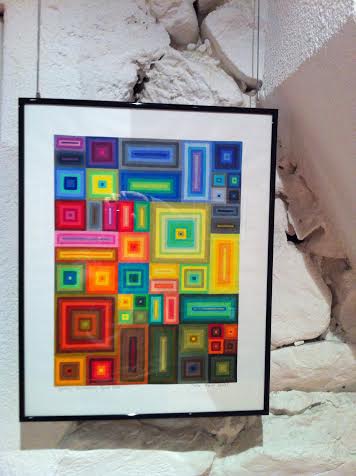
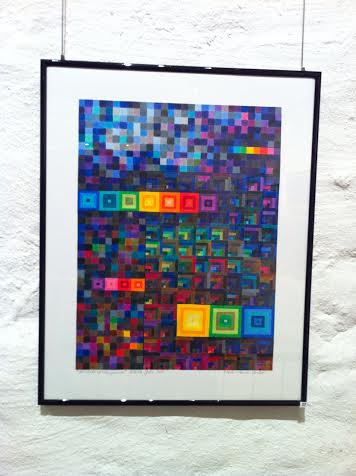
Many of your paintings focus largely on shape and color. Where did this fascination come from? 

It still surprises me how a different color can “change” a shape, it just never gets boring.

You have quite the variety of hobbies! Which ones do you still practice today?

Traveling and spending as much time outdoors, preferably in nature that has not been altered by humans.

Are there any that you would like to explore?

Yes, learning to fly!

A recent project of yours is The Tiny Big Bag, described as “The ultimate fashionable tote handbag (which) folds into handkerchief size.” Where did you get the inspiration for this idea? 

Moving to Vancouver many years ago (in 2000) from a country with very strict laws concerning the environment I was shocked to see that plastic bags were still free and used in enormous numbers in Canada. My cultural-shock-question was: “Would you like this double bagged?”


For original ideas such as The Tiny Big Bag, do you prefer to manage them individually or cooperatively with others? 

I would love to take a highly motivated partner on board – someone who has strengths I do not have myself!

Looking back on your journey, do you have any favorite/least favorite memories?

My favorite memories include the first time I saw the ocean (all the space!) after so many mountains at home. And, of course, the first trip I took out of Europe at the age of 17, which led me to Cameroon. Since then I am hooked! Africa is still my favorite continent!

Is there any point in your development as an artist that you regret or cherish most? 

I have few regrets in life! I cherish the fact that I am mostly self-taught in regards to my artwork. Curiosity is what keeps me going in life.

What are you looking forward to the most at this year’s Art Expo? 

The chance to meet people, see a lot of other peoples artwork and the possibility to show my work in a great location at Science World!

marie2

BODY PAINT: THE FACEBOOK RESTRAINT-An Interview with Matt Huntley

Matt Huntley is a body painter living, creating and working in Portland, Oregon. His Facebook Fan Page was recently removed due to “nude” photos of his models on his page. Though all models are covered in artistically executed paint and craftsmanship, censorship remains a key issue for body painters like Matt who are trying to push the norms of artistic expression.

 ImageImageImageImage

Interview with Matt Huntley

by Aly Laube 


About: Matt Huntley is an experienced body painter who works primarily with fantastical, horror, and special FX painting.

To see some of Matt’s work, go to: 

http://www.modelmayhem.com/mhuntley


Body painting has been a part of the Expo for a while now. Is this your first time taking part in the event and if so, what are you looking forward to?
2013 was my first time attending the event.  I met some wonderful people, and the experience was a good one.  I didn’t know what to expect, but had a blast, and placed 2nd, so I’m coming back for a second time. 


How did you get started in body painting?  
I’ve always been an artist, and got in to special effects.  After many years doing SFX and theatrical makeup, I got tired of the same work over and over.  How many zombies does the world actually need?  So I started doing body painting, and love every minute of it. 


How did you receive your training?  
I’m mostly self taught.  I was an art major when I first went to college, but quickly changed career paths.  I did intern in the Special Effects field for a few months, and received a decent foundation, but over all I just research various forms of art, talk with painters, sculptors, and makeup artists.  I practice all the time with new products, various paint brushes, and airbrushes.  


What is the best thing about working in body painting? 
I like turning the human canvas into a piece of art.  The human form is already such an amazing art piece, so to use it to create is really the best part of body painting. Also, I do like that it’s temporary (this means I don’t have stacks of canvases piled up in my studio.)


The art that you do is very creative. How do you experiment with your work? 
I’m always testing new techniques and designs.  I test new brushes and new products.  I test to see which products work best with each other and how various paints lay on top of each other.  I also check my designs against what has already been done, and if I’ve duplicated someone else’s work, I try to change my design when I can.  When working with photographers or models, I take their input on what they want the design to look like, and I try to think of a way to get that look as well.   I’m always pushing myself to grow as an artist in all aspects of my art.  


What inspires you? 
Everything.  People, shapes, nature, other artists.  I get inspired to create different things every day.  Sometimes this becomes overwhelming, so I keep a book that I jot down my ideas in. 


How have you evolved as an artist over time? 
My work has become cleaner, bolder, and more detailed.  My use of time has improved, and I’ve become more confident with my designs.


Did you always want to go into body painting? 
Actually, I wanted to be an art teacher. After years of exploring all forms of art, I happened into body painting and fell in love with it.


A lot of the work you do is very fantastical. Is it your own ideas or others that inspire you in this area? (i.e.: movies, books, art)
Most of the work I do are my ideas.  I do also collaborate with models, and photographers on a basic concept, and they give me artistic freedom.  Some of my work might also be an interpretation of some other art work.  I have painted a person and a horse, based on work from artist “Olivia De Berardinis”, and of course as a huge Star Wars fan, I have also done a few pieces that follow that genre.


Many different models are used for your artwork. How do you think the model is important to the piece as a whole?         This is a tough question.  I have designs that are designed around very specific models, and then I have some designs that are designed around body shapes. (tall, short, petite, curvy, etc).  That being said, when I’m designing a new painting I will ask the model what his/her favourite colours are, I look at skin tone, eye colour, hair colour, height, length of torso, legs, etc.  the shape of the model is important to the design, and the design is important to the model.  If you paint a model with a design she loves, she will make that design hers and work it. That being said, some designs are meant for a single shot, straight on, and the model becomes less important.  For instance, if I’m hiding a model in a mural, or against a back ground (camouflaging them), for this type of painting the most important part is the placement of the model and lining up the painting. 


How is body painting different than other forms of art?
Bodypainting is temporary.  First and foremost.  Also, what might take an artist painting on canvas 2 or 3 days (or weeks) a body painter must do in a few hours.  Our canvas is alive, they move, they stretch.  The movement of a foot can change the lines you’ve painted on a cheek… so taking all of that into consideration is very important.


You’ve painted on both men and women. What do you consider the important differences? How about similarities? 
Differences? Body hair.  When a man is going to be painted, they will shave or wax their entire body before. Rarely will a female model shave or wax her entire body, and then they will make a comment about body hair.  Every model, “every single person”, has body hair.  It’s just biology.  Most of it is light and small and can’t be seen… but you hit that with some paint, and from up close this can be seen. Nudity.  Most female models have no problem with being naked for a painting, whereas only a few male models are comfortable enough to get fully nude.  Body shape.  Simply put, women have more curves, breasts, hips, legs, they are curvier and softer.  Similarities? The initial reaction to the paint.  Be it brush, sponge or airbrush, their reactions are the same.  Most have the same questions about how one gets into bodypainting, as well as how to clean up, so I would say the differences are mostly physical and the similarities are mental. 


How did your home life/childhood impact your decision to become an artist?
I’ve just always been an artist.  I can’t remember not being an artist.  I’ve always drawn and been pulled to various art.  My art drove my imagination and my imagination drove my art.  Some people are inspired by music, or theatre, or sports, and I was inspired by colour, shape, lines, and creating.


What do you hope to explore as an artist in the future?                                                                                                               I’m planning my first trip to the “World Bodypainting Festival” in Austria, June/July 2014.  I am hoping to compete, but at the very least paint. I’m hoping to get to work at conventions, as well as do more “Larger” production paintings involving multiple photographers, costumers, and hair stylists.  


Image


Image

 Read Matt’s interview with the Oregon Times for details about his recent run in with Facebook:  

“Portland body-painting artist fights Facebook over nude photos”

http://www.oregonlive.com/entertainment/index.ssf/2014/01/portland_body-painting_artist.html