art

An Interview with Diva’s Niche Designer Rebecca Fisher

Interview With . . . Rebecca Fisher

by Alyssa Laube 


A Quick Autobiography

Throughout my life I have been many things – a daughter, wife, mother, llama farmer, business owner, teacher and now student. And now, as a recent breast cancer survivor, I find the experience of mastectomy, chemo and radiation to be a catalyst to many life changes. Now I am enjoying, with renewed excitement and appreciation, the preciousness of life. Divorced and with a decidedly different external landscape, I find myself drawing on my creative side with much more intensity, truly believing in the power of healing through art. I am recent graduate Capilano University Textile Arts Program where I spent two blissful intense years honing the skills I have garnered over a lifetime. My current work involves explorations in millinery and accessories finding these small canvasses the perfect venue for my creative energies.”

Image


When and how did you first get started in textiles? 

I remember using my mother’s sewing machine when I was 5.  I also remember taking my sister’s clothes and cutting them up to sew into Barbie clothes. I’ve been doing it since then.


Did you know you would want to do it as a profession?

My grandma came to Vancouver from London, England in 1905. She supported her family by sewing and selling smocked dresses out of her children’s clothing store on Robson. When I was 9, she taught me to smock. It was a very serious endeavor for her and she made me swear on a bible never to tell anyone how to do it ,as one day I would make my living smocking. When I had completed a baby dress, I went back to see her and she went over every stitch, folded the dress in her lap, and said, “It is saleable.” That was the hardest jury I have ever passed! I knew at that point that I had an aptitude for textiles and it was a natural progression.


What about working in the field do you like/dislike?

I love the alchemy of marking and colouring cloth – of taking something plain and giving it life. It’s a celebration of colour. I create these textiles with the intention that they will be worn and lived in. The only thing I really dislike is that there aren’t more hours in a day!


You use both natural and unnatural dyes. What is the reason for this, and how are they different?

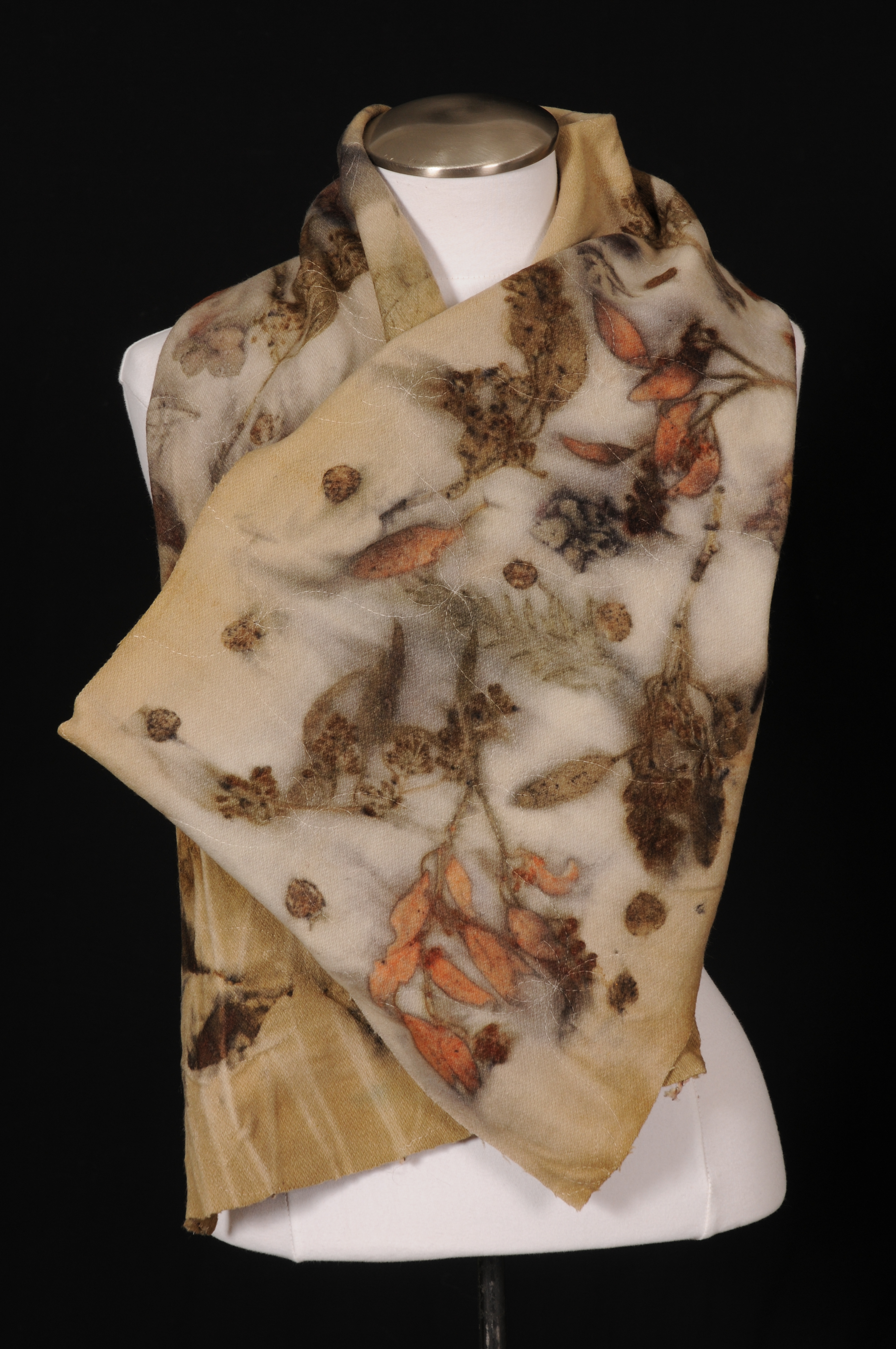
I am by no means a purist as far as attachment to a specific technique goes. Having said that, I love each for their own unique vocabulary. The natural dyes only work on natural fibres and that brings a richness that is unrivalled by anything manmade. I love the smell of the silk and wool in a dye pot of onion skin tied with rose leaves and eucalyptus. The colour palette is soft and deep and reminiscent of an old secret garden hidden away for centuries. I also feel an attachment to the many generations of natural dyers and artists before me when I work in this medium, as if my hands are not the only ones placing and wrapping leaves and flowers against cloth. It’s like a collaboration with the earth and my ancestors.

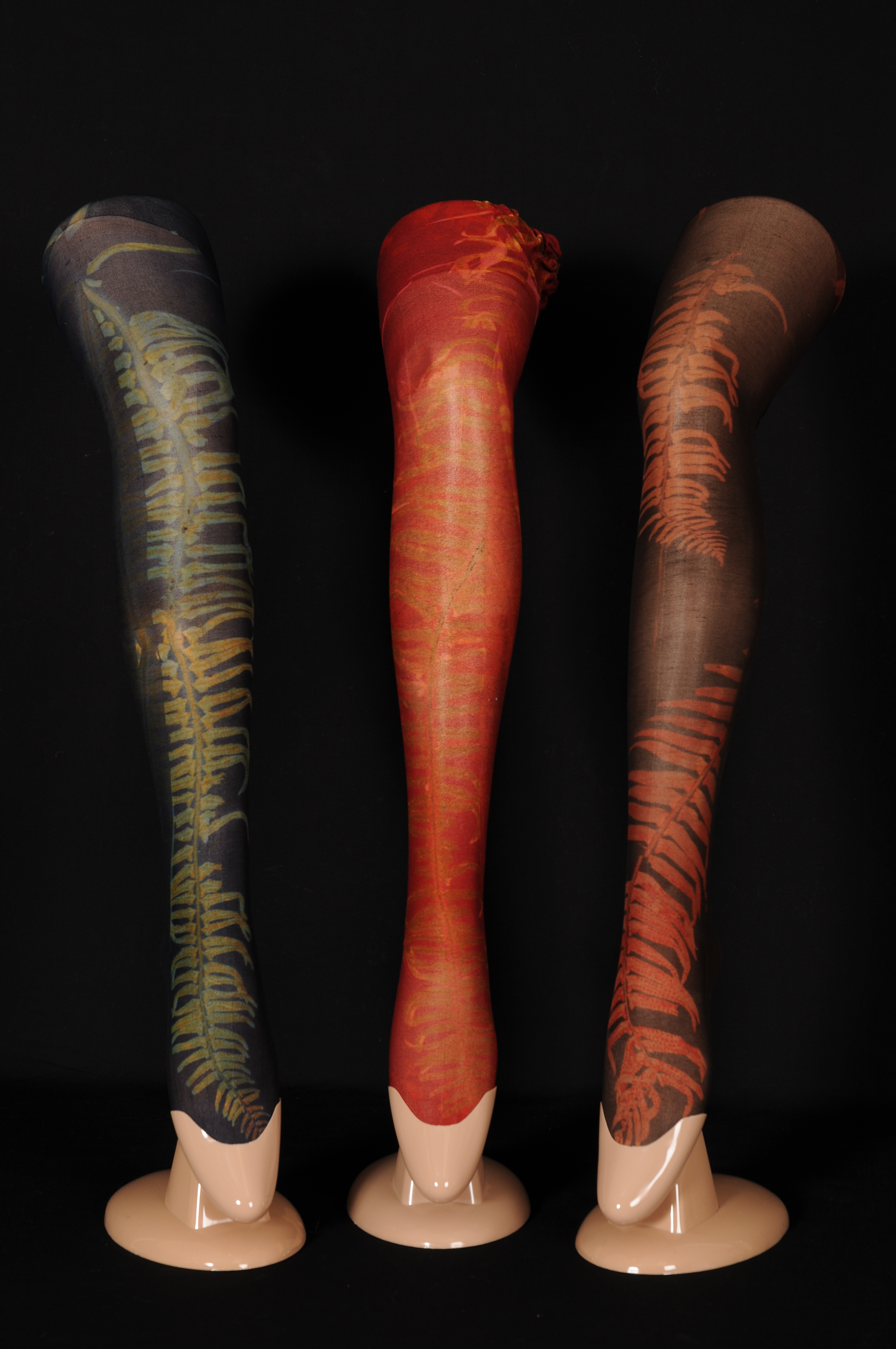
The manmade dyes have a vibrancy and colourfastness not achievable with natural dyes. There is an immediacy in their usage that appeals to my magpie-like attention span. There is also an element of repeatability and reliability that is missing in natural dyes. The dyes that I use on the printed hosiery are polyester-specific and can only be used on manmade fibres. They are particularly successful on hosiery and poly satins, hence the development of the line of printed panty hose and scarves. 
Image

How did your family influence you as an artist?

As a child, I spent a great deal of time with my grandfather. He taught me about the colour wheel using tempura paints mixed by my mother on a wooden easel built by my father. I guess you could say that my artistic side was recognized and supported. I also spent a great deal of time in my grandparent’s antique store which may account for my obsession with textiles. I remember the thick velvets and laces and today, lace images still find their way into my work. My father was an amazing gardener and I think that influenced my colour sense as well as a love for the intricacies of different leaves and flowers. My great grandmother and great aunt lived on Lasquiti Island for many years and collected many books full of pressed flowers which were put into pictures and cards. I was always mesmerized by the delicate petals pressed flat – like I was looking into the secret domain of fairies – or something equally romantic. I still have a picture over my bed made by my great grandmother with pressed ferns and flowers. The aesthetic is quite similar to the imagery on my fern imprinted hose.


Do you have any training or are you self-taught?

I have spent a lifetime exploring textile arts and am a recent graduate of the Caplilano University Textile Arts Program – a wonderful program that was my gift to myself for surviving chemo therapy after breast cancer 5 years ago. This is currently the final term that this 40 year old program will be running – one of the many Arts cuts at Capilano University. It’s such a shame. This program offers students a skill base not found anywhere else.

I was born in Vancouver and have always lived in this area. the West coast imagery is part of my soul. There is never any shortage of inspiration. It can be found on short walk down the road to the river or just out in the backyard. The little fellow that was the model for my raccoon hat was a constant visitor last year. Always by himself, he would come in the evening and hang around in the backyard, watching us with great curiosity. The skunk hat also had a live model although not so cute. He sprayed the dog 4 times last year!


Considering the exaggeration of natural elements in your work, how does living in B.C. affect you? 

Nature has both a fragility and a great strength. It has beauty that is constant and changing. I am always collecting rocks and twigs and leaves whose designs speak to me. My china cabinet is full of skulls collected from under a bald eagles nest. They sit perched on my grandmothers china. Both aesthetics equally precious to me.


Why do you feel drawn to nature?

I don’t know that it was ever a conscious idea or decision. You doodle and draw and paint and slop dye around – Some things appeal and some don’t. I very rarely have something turn out the same as the idea had when I began. Designs morph as you go. I have a very free-flow style of working that follows through the rest of my life as well. Sometimes I think it would be easier to approach things in an organized and structured fashion, but I have come to realize that you can’t fight your brain.


How do you like to use color in your clothing? 

I love colour. It’s all about mood. Sometimes it’s playful with bright colours and other times more subdued and calming. Each day is a new day.


You make both accessories and garments. Which do you prefer, and how are they different?

I probably make more accessories than garments. They are a smaller canvas and I can experiment and work out different ideas. If that experimentation is successful, then it often progresses to a garment.


How long does it take you to complete one piece, usually?

I don’t really work with things one at a time, so it’s hard to say. If I am doing hats, I’m washing fleece and as it dries I am carding other fleece and felting blanks. While they are drying on hat blocks I am needle-felting the features on other ones. It’s like an assembly line – a skill I developed through years of hairdressing. The panty hose are the same kind of thing. I am painting the designs on paper, while its drying I am collecting and preparing the ferns and leaves, then laying them out in stacks and heat setting them. I do tend to do things in runs. If I am making scarves then its a scarf day or a felting day or a flower day, mostly because each thing requires a different set of equipment and I have a small space to work in.


When you are picking which objects to incorporate into the cloths, what do you look for? 

Sometimes on a walk I will discover plants with interesting shapes or in the thrift store i’ll come across some really tacky doily with a lot of texture that is perfect. I feel like mostly, the things find me. Like the other day, I took the dog to the off-leash dog park and he shot off after a duck with me chasing after him. During that little adventure, I discovered the ferns that were growing from the trees – slightly softer and smaller than the ones I had been using. I was curious to see if they would work and how they would translate on to cloth. I loved them so I plan to go back later this week and pick some more.I am always careful to pick gently and not take too much, especially with things like lichens.
Image

Explain the process of making those objects a part of the fabric. Is it difficult?

Sometimes I will paint the actual leaves, others I will make silk screens of the leaf images and screen the dye on. Sometimes I draw the images by hand, or a combination of all 3. It’s not any more difficult than another technique but it does require a fairly in-depth understanding of how the dye works and some specialized equipment.


How did you learn to do it?

I learned my basic skills at the Textile Arts Program at Cap U and have actually just completed a directed study to develop this technique. I wanted to take advantage of the last term the program is running to further my experimentation.


Where do you find your materials?

With the leaf imprinting, any time I leave the house I usually find something. My pockets are always full of leaves and twigs and seeds. The hats I buy use local specialty fleeces and  I process them myself. The fabrics are often rescued or vintage.


Do you ever work with others professionally, or do you prefer to work alone? 

I love collaborations and I love creating in solitude. Sometimes it’s nice to have someone of a similar mindset around to assure you that you are not crazy and to bounce ideas off of.


What is your favorite piece to make?

Every piece I make is my favourite piece in that moment. Although I have to say I am really enjoying the panty hose currently.


Which fabrics do you use for each garment? How do you treat each one differently?

Each fibre and fabric type – wool, cellulose, and polyesters – all require different dyes and treatments. I use wools for hats, scarves and shawls which may also incorporate pieces of silks or polyester.


How do you experiment?

Everything I make is an experiment. I am a messy artist, not by intention. It’s just that when I am working, I am oblivious to the rest of the universe. 


How do you get such original ideas? Do you have any ways to encourage yourself creatively?

I think it is important to spend time with other creative types to keep the energy up. It’s also important to give myself time to create; turning off the phone and working undisturbed even if its just to mix dyes and sweep the floor or unroll fabric. I try to do my initial experiments without attachment to the outcome. I fine tune an idea before committing it to a 500 dollar piece of cloth. Sometimes doing something in a completely foreign medium is a great creative boost.


Do you have any other jobs or hobbies?

I foster high risk youth in the other part of my life. I like to garden and I like to cook.


How does your personal life affect your professional life?

I think the high stress level from my job fuels the need for creative expression. They kind of feed off of each other. Over the last 2 decades I have managed to keep a fairly symbiotic relationship between the 2 sides of my life.


What are you hoping for at this year’s Art World Expo?

I am really looking forward to this expo and am excited to be involved in such a creative venture. I am hoping that my textiles will be well received and I look forward to making many creative contacts. Did I mention that I was excited?
 

Waffle Gone Wild at Art World Expo!

We are very excited to have our first ever Food Lounge at Art World Expo this year! Debuting as our first restaurant partner, we welcome Waffle Gone Wild to our show!

Little Monsters at Art World Expo!

Interview with…

Little Monsters Studio 

by Monika Blichar 


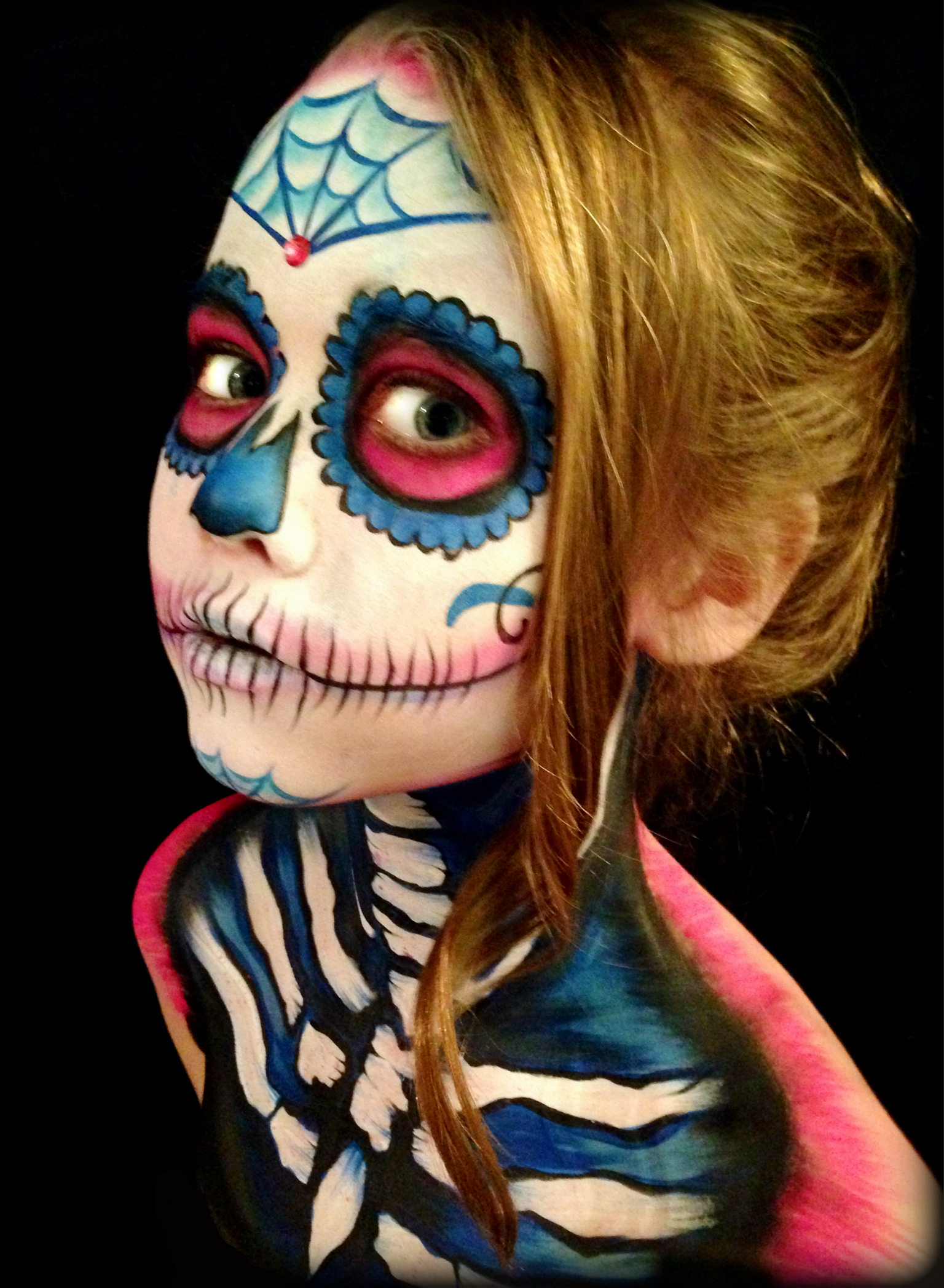
Meet Artist Kathleen Erickson from Little Monsters Studio! 

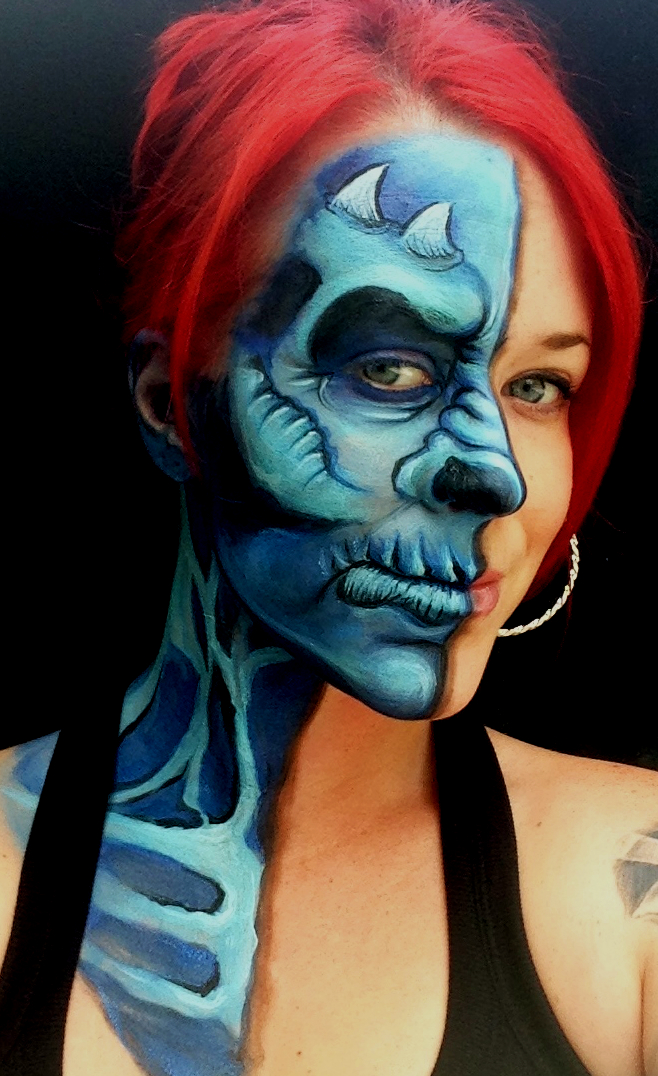
A first time competitor, we are very excited to see what this Monster can do! Apart from having amazingly talented creative skills in face and body painting, Kat is also an accomplished visual artist creating unique pieces like custom paintings and growth charts for kids. We caught up with Kat and asked her a few questions about her experience as an artist in B.C. Here is what she had to say! 


Image

When did you start doing face/body painting?

I took a more serious approach to my painting when I turned 15 and being an artist; I was always experimenting creatively with my children and painting their faces. This helped me transition into starting Little Monsters Studio three years ago.

 Image

Your family and work seem to blend together. How have your kids helped you with your inspiration for your business?

I find with maturity, I sometimes start to take a more scientific approach to my art. So having children helps to keep my art especially my body art & face painting fresh & unconventional.

My children & their friends always want their faces painted and it makes for great family outings like going to the Vancouver Zombie Walk or getting painted for a Seahawks game with my husband.


This is the first time you are competing in Art World Expo body painting competition. What are you looking forward to the most as a first time competitor?

The competitive nature of any competition will only help me to improve in my craft and with my confidence. But what I’m really looking forward to is being surrounded by so many exceptional artists and talented people.  Just being part of this contagious atmosphere and networking with my peers, will be stimulating enough. Then there’s all the great art.


What kinds of services and merchandise do you offer the public?

Face painting & body art are my primary sources of income, but I also sell my paintings and growth charts. During the month of October, I open up my studio to work on big Halloween projects for costume competitions and parties.


What is your biggest dream regarding your art and business?

My goal is to be able to support my self enough, so I am able to continue to focus on projects that I love. I adore body art and especially the Halloween spirit and just being able to continue to grow in this realm would be ideal.


Image

Welcome to the show Kat! Wishing you good luck! 


For more information about Little Monsters Studio, please visit Kat and her troop on her Facebook site: https://www.facebook.com/littlemonstersstudio?ref=br_tf


Art World Expo & 360 Replays

ART WORLD EXPO TM is pleased to present this amazing video of a one of a kind body art installation featuring the creative process in a unique way captured by 360 Replays.

360 Replays develops interactive technology for Internet TV. Their mission is to make interactive TV the regular TV on the planet. In addition, 360 produces camera systems that can be used to capture interactive content delivered over Internet television.

For more information about 360, visit:
https://www.360replays.com
https://www.facebook.com/360Replays

Art World Expo is an annual large scale art show and fundraiser featuring over 100 artist exhibitors, fashion shows, a body painting competition and live demonstrations. The fourth annual event will take place on May 2, 2014. The event is produced by MAB Ventures Inc., An Arts & Entertainment Agency with proceeds benefiting Make and Break Arts Foundation. The event takes place at Telus World of Science in Vancouver,BC, Canada and features artists from around the world.

For more information about the event or to purchase tickets, please visit:
https://artworldexpo.wordpress.com/

https://www.facebook.com/ArtWorldExpo?ref=br_tf

Order tickets by phone 604 999 6177

Body Painting Artist: Cory Keys

Hair & Face Make Up: Monika Blichar
http://www.monikablichar.com

Model: Emily Blackwell, Red Goddess Talent
http://www.redgoddesstalent.com/
https://www.facebook.com/pages/Emily-Blackwells-Fan-Page/187599184648341

Thank you to the Art World Expo TM 2014 Platinum Sponsors:

Twin Peaks Construction
http://www.twinpeaksconstruction.com

Fresh Vancouver Magazine
http://www.freshvancouver.com

Emerging Painter Margaret Kitchen Joins The Show!

IMG_0509IMG_1249

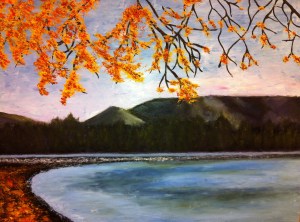
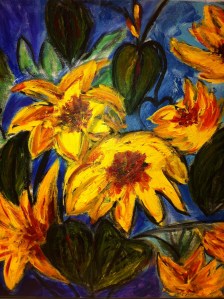
About: Margaret Kitchen, new to Vancouver and the art scene, creates beautiful paintings of landscapes and other scenes. She works in a school teaching special needs children, and practices as an artist in her spare time.

 IMG_2067

This is your first time at the Art World Expo. Is there anything particular you’re looking forward to?

I’m very nervous and excited just to experience it and be there to see other artists.

How were you introduced to art?

Growing up, my Mom was always creative. Not in painting, but in things like beautiful knitting and needlepoint. We would come home from dances and she would have entire outfits she’d made ready for us! Also, about 5 years ago I was looking at paintings a lot and thinking, “I want to do that.” I wanted to explore something different. Reading Drawing from the Right Side of Your Brain explained that everybody can draw and not to be afraid to make mistakes and to fail. It just sort of said, “Where are the rules? Anyone can do it.” Art is an outlet. It doesn’t have to be perfect.

How were you influenced as an artist by your heritage or home town?

Okanagan landscape is so inspiring. You go hiking or to lakes and just think, “I wish I could paint this.” It’s just so beautiful. There were great local artists and galleries, so it was really just a part of the community.

Who was your main inspiration growing up and how has it changed from then?

My Mother, because it was always important for her to be creative with her hands and to completely immerse herself.

How would you describe your style?

I love using oil paint. I love art to look like art. I really like artists like Robert Bateman. Lots of paint, thick, color, so I guess I would call my style impressionistic.

What do you consider your “big break”?

I am really glad that I met Monika. I started her art class and she and I really hit it off. Pretty much, she said “who cares! Do it and have fun,” and here I am.

How have you developed as an artist, both professionally and personally?

Personally, it’s opened up a whole new world of creativity to me. The whole journey of it has been fantastic; meeting all of these great people and producing artwork that I like. I love that now I can paint a picture and give it to someone.

What was an artwork that had a lasting effect on you? How so?

I’m so amazed all the time at the level of creativity and artistry just here in North Vancouver, just the local art that I see around. I also went to the Vancouver Art Gallery and saw Metis which blew my mind, and last winter I saw some Emily Carr which I love.

What is your favorite art gallery or event in Vancouver?

I love the art crawls. They have one in North Vancouver and one in East Vancouver.

What type of environment do you prefer to work in (i.e.: a studio, home, etc.)?

I like to be by myself sometimes but I also like to be in a studio where there are people I can bounce things off of and ask, “What do you think? What do you see?” I like to get advice, too.

Where do you get inspiration for your art?

My daughter, the landscape, other art.

What was the first piece of art you sold?

Well, I don’t sell my art! My mother in-law asked me to paint a picture of the Capilano River. It was the first painting that I thought “I like this,” and I kept it, but painted her a couple more and gave them to her. I think that if I didn’t get so attached to my paintings, I could sell them. They’re like my babies!

Is there a main theme or message to your art? If so, what is it?

It is more of pure expressionism for me.

What is your favorite (and least favorite) thing about being an artist?

My favorite thing is that it’s a way of being creative and expressing yourself – that feeling of the great escape. It’s like meditation. I haven’t found anything negative about it yet!

Did you always want to be an artist? If not, what did you want to be and  when/why did you change your mind?

I never saw myself as an artist. I wish that I had tapped into this side of myself when I was younger would have loved to be a dancer, but during the time that I was growing up, it was never something I could imagine doing. Over the last 25 or 30 years I’d squelched that side of myself. Before my work as a Teacher, I was a Dental Assistant and would wear a different sweater every day. I’ve always liked to be creative and express myself but never thought it was something I could do. I think that if I had grown up in a different time or family I would have explored it a lot earlier.

Do you currently have a favorite artist?

Yes! He has a studio in West Vancouver. Yates. He does all sorts of West Coast landscapes with nice palette and color.

Describe the Vancouver art scene in three words

I don’t really know it that well, but I would say there are a lot of different kinds of art so versatile, exciting, and welcoming. All of the people that I’ve met have been very positive.

What can’t she do? Meet International Artist and Super-Woman Marie-Anne Vorlet!

Marie-Anne Vorlet was born in the French part of Switzerland and raised as well as schooled in the German part of same country. After high school, no longer able to numb the urge to travel and experience the world, she looked for ‘portable’ work. She spent her first years as a working girl as a nanny in England, Cameroon (West Africa) as well as in Switzerland. During those much enjoyed years she developed a yearning for more knowledge which surprised her as she remembered school as a place of boredom. After earning the ‘Matura’, the Swiss school diploma required to enter any of the countries universities, a short detour to medical school helped Vorlet figure out what she did not want in life. It also allowed her to finance her years studying math, physics and astronomy. Working night shifts at the major teaching hospital in Zurich, teaching math as well as Tao Yoga on the side made ends meet. After these quite long years the travel bug hit again. Lucky enough to find a very flexible employer in one of the two big Swiss banks as well as work as a freelance translator, Vorlet explored parts of Europe, America, Nepal, Hawaii and South Africa. Crafting, especially sewing and knitting has been a hobby since age five, a year working in the shop of a avant-garde dress-maker in the late eighties, gave her the possibility to have a close look behind the scene. Statement: “No matter what I am doing, I am at my very best when dealing with a situation that is completely new to me. And I do love to create some

marie

Interview With Marie-Anne Vorlet

by Alyssa Laube  

About: Marie-Anne Vorlet, born and raised in Switzerland, is a woman of many titles – from world traveler and volunteer to artist and entrepeneur! For more information on Marie, visit:

http://www.thetinybigbag.net/MAVBio.htm

 Having grown up in the beautiful country of Switzerland, were you influenced by your roots? How so? 

Yes. I think my roots have indeed influenced me, especially the French Suisse part of them, as well as our beautiful landscapes. The Swiss “Frenchies” take life easier and appreciate beauty and the arts a lot!

You’ve spent a lot of time travelling in your life. How did this change you, both as a person and an artist?

Travelling is definitely my bliss in life. I love to see new landscapes and colors, taste new foods, and meet people with different ideas. Travelling and volunteering in Africa made me appreciate the many possibilities we have and tend to take for granted in the rich countries!

How does Vancouver compare to other cities that you have lived in?

I love and appreciate the proximity of big city-life and nature that Vancouver offers. It makes it a part of my “all-time favorite cities” list, which includes Zurich and Cape Town for the same reasons.

Have you always had an adoration for new experiences? 

Yes – I actually had a longing for the “new and exotic” since Primary School, which, as a child, made me devour books with a passion.

As a person who has tried many different occupations, do you feel that they were necessary in order to find your true passion?

Definitely! Nothing compares to personal experience.

What do you consider to be that passion?

Art, making new ideas work, i.e. creating my own NGO: www.educationwithouborders.ch, which was inspired by my Canadian friends. After volunteering regularly at and supporting my friend Heather Reynold’s orphanage, ‘God’s Golden Acre’ in KwaZulu-Natal, South Africa, for years, I strongly believe that education is a door opener!

How many languages do you speak?

Four: Swiss German, German, French and English – I have plans for learning Zulu as soon as I have more free time.

How was it beneficial to be multilingual, professionally? 

It has been very beneficial, especially in Zurich because this city is quite international in its focus.

What is your favorite place that you have been to or lived in?

Namibia – the desert colors are just divine! Paris: fashion, art, food – need I say more?

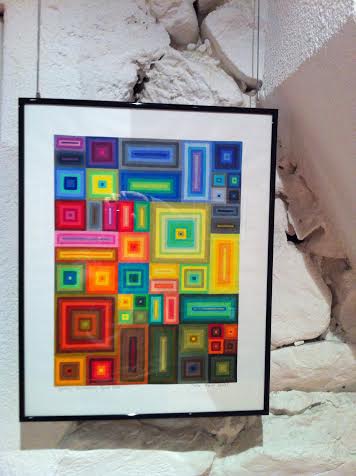
Many of your paintings focus largely on shape and color. Where did this fascination come from? 

It still surprises me how a different color can “change” a shape, it just never gets boring.

You have quite the variety of hobbies! Which ones do you still practice today?

Traveling and spending as much time outdoors, preferably in nature that has not been altered by humans.

Are there any that you would like to explore?

Yes, learning to fly!

A recent project of yours is The Tiny Big Bag, described as “The ultimate fashionable tote handbag (which) folds into handkerchief size.” Where did you get the inspiration for this idea? 

Moving to Vancouver many years ago (in 2000) from a country with very strict laws concerning the environment I was shocked to see that plastic bags were still free and used in enormous numbers in Canada. My cultural-shock-question was: “Would you like this double bagged?”


For original ideas such as The Tiny Big Bag, do you prefer to manage them individually or cooperatively with others? 

I would love to take a highly motivated partner on board – someone who has strengths I do not have myself!

Looking back on your journey, do you have any favorite/least favorite memories?

My favorite memories include the first time I saw the ocean (all the space!) after so many mountains at home. And, of course, the first trip I took out of Europe at the age of 17, which led me to Cameroon. Since then I am hooked! Africa is still my favorite continent!

Is there any point in your development as an artist that you regret or cherish most? 

I have few regrets in life! I cherish the fact that I am mostly self-taught in regards to my artwork. Curiosity is what keeps me going in life.

What are you looking forward to the most at this year’s Art Expo? 

The chance to meet people, see a lot of other peoples artwork and the possibility to show my work in a great location at Science World!

marie2

Carve or Starve!-An Interview with Jesse Toso

About: Jesse Toso, born and raised here in British Columbia, is a talented woodcarver whose tool of choice is equally impressive: a chainsaw! To see some of Jesse’s extraordinary work, go to: 

http://www.stumpartist.com

Image

Image


The first time you carved was at a competition in 2005, at which you took first prize in the Amateur category! What motivated you to take part in the competition, and did you have a feeling that you would be a natural?

I grew up in Campbell River where the Transformations on the Shore Chainsaw Carving Competition has been taking place since 1997 and I remember looking at the amazing carvings produced at the event each year and I thought to myself: “I could do that”.  So,  I borrowed a chainsaw and hacked away at this giant piece of Douglas fir and by the end of the week, I had shaped out a Phoenix. After taking home the $1000 prize, I decided to do it every year after. This year will be my tenth!


Why do you prefer to work with a chainsaw, rather than other tools? 

Chainsaws are fast.  

In your opinion, how does the type of wood influence the final carving? 

The type of wood I use influences the final carving immensely.  The colour, the size/shape, the grain are all contributing factors.  Sometimes I look at a piece of wood and determine what to carve based on it’s shape and type, and other times I will want to carve something and look for a piece of wood that will work, but ultimately it is the wood’s inherent qualities and characteristics which influences the final carving.

What did you do for a living before wood carving entered your life? Do you think you will continue to wood carve for the rest of your career? 

I am a carpenter by trade as is my dad so working with wood comes to me naturally.  I will continue to keep carving wood, but I am also interested in exploring the artistic relationship(s) between other building materials, namely: glass, metal and concrete.  And I’ve always wanted to try carving ice.

What is the best part of working in wood carving?

Wood is a beautiful, natural, and quite versatile.  And it’s sustainable.

How have you improved over the years? 

I improve every time I carve. Going to annual carving events such as the competition in Campbell River and Carva-Palooza (an annual chainsaw carver’s convention in Ontario) has also been a huge boost.  I hope to continue improving with every carve.

What do you consider your most difficult piece? How about your favorite one? 

I would say the 16-foot spider hanging on the side of a building in downtown Campbell River was my most challenging and my favourite, too.  It involved creative engineering, 3D visualization, chainsaw joinery, and it was done in five days (as a part of the carving competition).  Also, it caused a bit of controversy.  People wrote into the local newspaper asking it be taken down as they have arachnophobia and could no longer go to the theatre because of the giant wood spider overhead!  Other people then responded in defence of the spider, and it so had people talking in Campbell River.  Which is what art should do, right? I have since carved several spiders and I will be bringing a “smaller” 8-foot version to Art World Expo.

You’ve worked on a variety of different sculptures, mainly focusing on animals. Do you prefer to use nature for your inspiration and how come? 

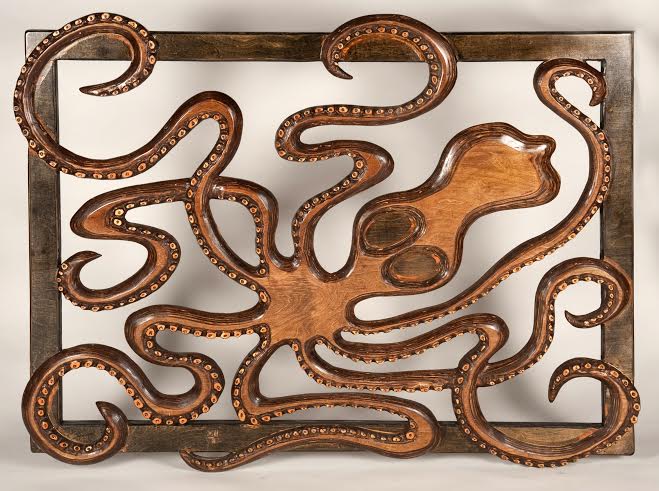
I am drawn to curvy, smooth, rounded, flowing shapes such as octopus legs, dragons, or the neck of a heron, and so find myself carving such shapes.  It happens that most things with these characteristics are from nature.

How has working first-hand with nature changed your relationship with it? 

Trees are precious. I am honored and humbled when I carve into wood that had once been a tree that had been standing for hundreds of years. I feel I need to use every bit of the wood I am carving.  Many of my carvings are from off-cuts from other carvings. 

Do you think that wood carving differs from other forms of art? How so? 

All art is expression. Carving wood with chainsaws is just another way for me to say: “Look what I can do!”

Do you have any advice for beginners in the field? 

Carve or starve! 

 Image

Have you ever done a collaborative piece? If not, would you like to? 

I have done several collaborative pieces.  As a part of Carva-Palooza, one of the several carvings we do is made with a partner. Actually, this year I will be leading a group project (at Carva-Palooza) where eight of us will carve a complete chess set out of logs. I am really excited to see how this turns out.

Adelle Airey shows for the first time at Art World Expo 2014

ImageImage

Interview With…

Adelle Airey

by Alyssa Laube

About: Adelle Airey describes herself as a “self-taught artist, typically creating acrylic paintings of single flower blooms or plant life covering the entire canvas.” To learn more about Adelle, go to http://www.facebook.com/AdelleAireyArtworks


Is this your first time at the Art World Expo? What are you looking forward to?

Yes.  I am looking forward to having my work on public display for the first time.


How did you get started in art?

I have always loved to draw and create things.  My grandmother liked to paint and she encouraged me to paint even if it was just as a hobby.  I was recognized in my senior years of high school, as Seaquam Secondary’s “Outstanding Senior Art Student” and commissioned to design and paint a hallway mural.  My pencil & ink drawings and water colour paintings were proudly hung around my parent’s house.  Many of my early pieces were given as gifts to special friends.


How were you influenced as an artist by your heritage or home town?

Our family lived on a small non-working farm in Delta in the70s.  Growing up surrounded by colourful things in nature and interesting personalities of animals, has definitely influenced my art.


Who was your main inspiration growing up and how has it changed from then?

Artists like Patrick Nagel and Ty Wilson have probably made the biggest impression on me as an artist.  I admire their simplicity of style and use of contrasts and colour.


Many of your paintings are of flowers. Is there any specific reason for this?

I still have the first photo I took with my parent’s camera.  I was 9 years old and it was of a rose in our garden.  I appreciate the wide variety in plants and flowers, and they allow for artistic expression.


What do you consider your “big break”?

Art World Expo 2014 !


How have you developed as an artist, both professionally and personally?

I realize I cannot be afraid to experiment.  Researching techniques and ways to improve as a painter may not always lead to a “good” piece, but that is ok.  Personally, I have “developed” in facing my fears and gaining confidence in myself as an artist.


How did you receive your training?

I am a self-taught artist with no formal training.


You also create sculptures. How did that start?

I started a craft project over the winter of ‘93. My first Paper Mache sculptures were a decorative bowl and a prickly pear cactus.  After showing a co-worker what I had made, she asked if she could commission a piece for her home.  The sale of that piece quickly lead to another 5 commissioned pieces.


Have you ever gotten “Artist’s Block” and if so, how did you deal with it?

I didn’t do any art for a long time.  Don’t know if that was a “block” or just letting life get in the way of something I really needed to do.  I find setting a goal or deadline for a piece helps motivate me.  I try to work on my art only when I’m in the mood”.


What is your favorite (and least favorite) thing about being an artist?

Fav: I get a lot of satisfaction when I am finished a piece and it turns out the way I envisioned.  Least fav: criticism that is not constructive.


Did you always want to be an artist? If not, what did you want to be and when/why did you change your mind?

Yes.  I just didn’t really know what kind.  I thought about being a graphic artist; makeup artist; or interior designer.


Making Sweet Social Connections outside of the Salon-Meet Tres Bon Beauty

Interview With…

Diane Travis From Tres Bon Beauty

Interviewed by Alyssa Laube

About: Meet Diane Travis, the owner of “The Local Hair and Beauty Salon That’s Making Sweet Social Connections,” Tres Bon Beauty. For more information on Tres Bon Beauty, visit http://www.tresbonbeauty.com/

How would you describe your past experience with the Art World Expo?

This is my 3rd yr. at Art World Expo, Last year, I had business from it and it was worth it financially for me.

How did you get started and trained in beauty?

I entered hairdressing school the year I graduated from high school. I trained at Comer and Doran Hairdressing Method in New Westminster.  I upgraded skills by taking many colour courses, seminars and conferences along the way.

Did you know instantly that you wanted to pursue it?

I believe I was born to be a hairstylist.  After constantly looking to comb my mother’s and grandmother’s hair and begging my mom to buy more makeup, the family said-I think she’s going to be a hairdresser!  And the rest is history!

At Tres Bon Hair & Beauty, you emphasize interacting personally with clients. Is there a reason for this, or is it simply in your nature?

I am personal by nature, but the reason I like to interact helps me to create the best result for their lifestyle.  I help take the stress out of beauty for them.

Other than personal service, what makes Tres Bon different from other salons?

Tres Bon creates a smaller space where clients can relax and feel pampered.

How did your childhood, family, and hometown influence your work?

My childhood taught me hard work, good values, and the importance of family.

You offer a variety of services. What do you consider your specialty?

My favourite service is what I call “The Petite Makeover” – Ladies cut/color/few hi-lites/style and easy makeup.

How have you developed as a professional?

I would say that personal and professional are one in business. I consider personal growth essential to be able to give people the service they absolutely need and want.  I still do what I do, just change the way services are given.

As someone with experience, do you have any words of advice for new business owners?

My advice to new business owners: follow your passion and talk about it clearly and simply. Define your uniqueness, and ask for what you need and help others.   You cannot do it alone!  Make your life easier, not harder. And have a wonderful time!

What is your favorite (and least favorite) thing about working in beauty?

I get to make people look good and feel good. My least favourite thing is the client who doesn’t get it!

Do you have a favorite memory from working with Tres Bon Hair & Beauty?

My favourite memory is the story, the many stories, but the many compliments I get regarding how I make them feel and look.  This is why I do what I do.Imagetresbon-kara

“Mass Produced Art Ain’t Nothin’ but Cheap Imitation”-Artist Gayle Arnold

Gayle Arnold

We’ve known artist Gayle Arnold for several years. She is an active painter in the Vancouver area, works from Port Coquitlam and participates in all sorts of shows as well as teaching private students. In her response to sharing an interview about her art with the Art World Expo blog, she submitted this piece highlighting what she believes about the Art World today.

The beginning of this video starts out with close-ups of various paintings by Gayle Arnold. They are abstract up close but from a distance they are clearly described images. The music was performed by Gayle Arnold and her partner Justin Symonds, who perform together as The Strangest Days.

“Like” Gayle – http://www.facebook.com/GayleArnoldTSD
The Strangest Days – http://www.reverbnation.com/TheStrangestDays
“Like” TSD http://www.facebook.com/GAJFTSD

For more information about Gayle Arnold, please visit her site:
Gayle’s portfolio website – http://www.gaylearnold.com